Lighthouses and Rainy Days
Everything we did between Port Stephens and Yamba
✒️ Written by: Abbie, with edits by James
After the first section of our campervan journey from Sydney to Hunter Valley, the next leg was Port Stephens to Yamba. It was well and truly winter by now in Australia, and although the temperature remained mild, the rain settled in and we enjoyed long beach walks on damp sand and the sound of the rain on the Wombat Wagon roof.
Port Stephens
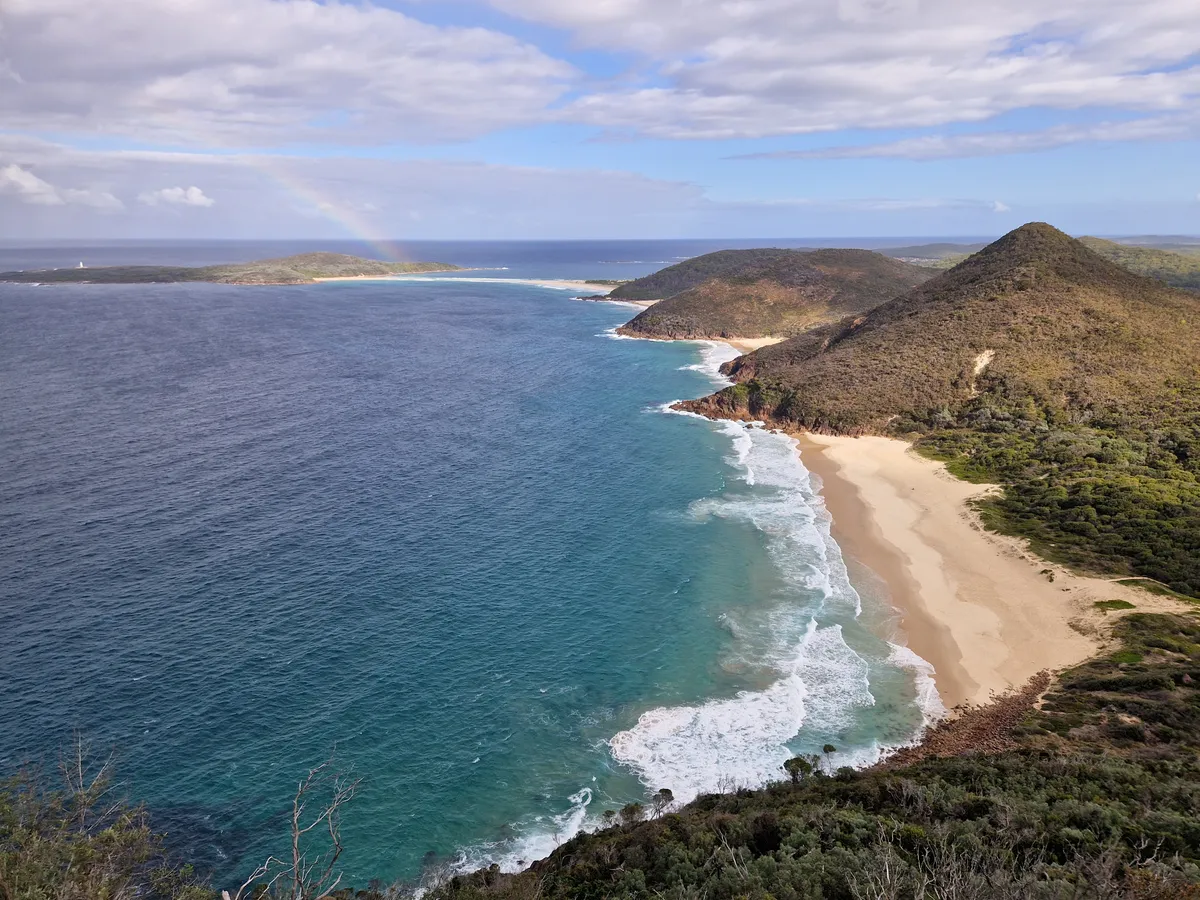
We started out with Tomaree Head summit walk. The short but steep walk took us up the side of the mountain and gave us impressive views below. We looked down at multiple beaches sandwiched between headlands of bush. A rainbow floated like a halo above the distant Port Stephens Lighthouse. Visiting lighthouses became somewhat of a theme during this stretch of our East Coast travels.
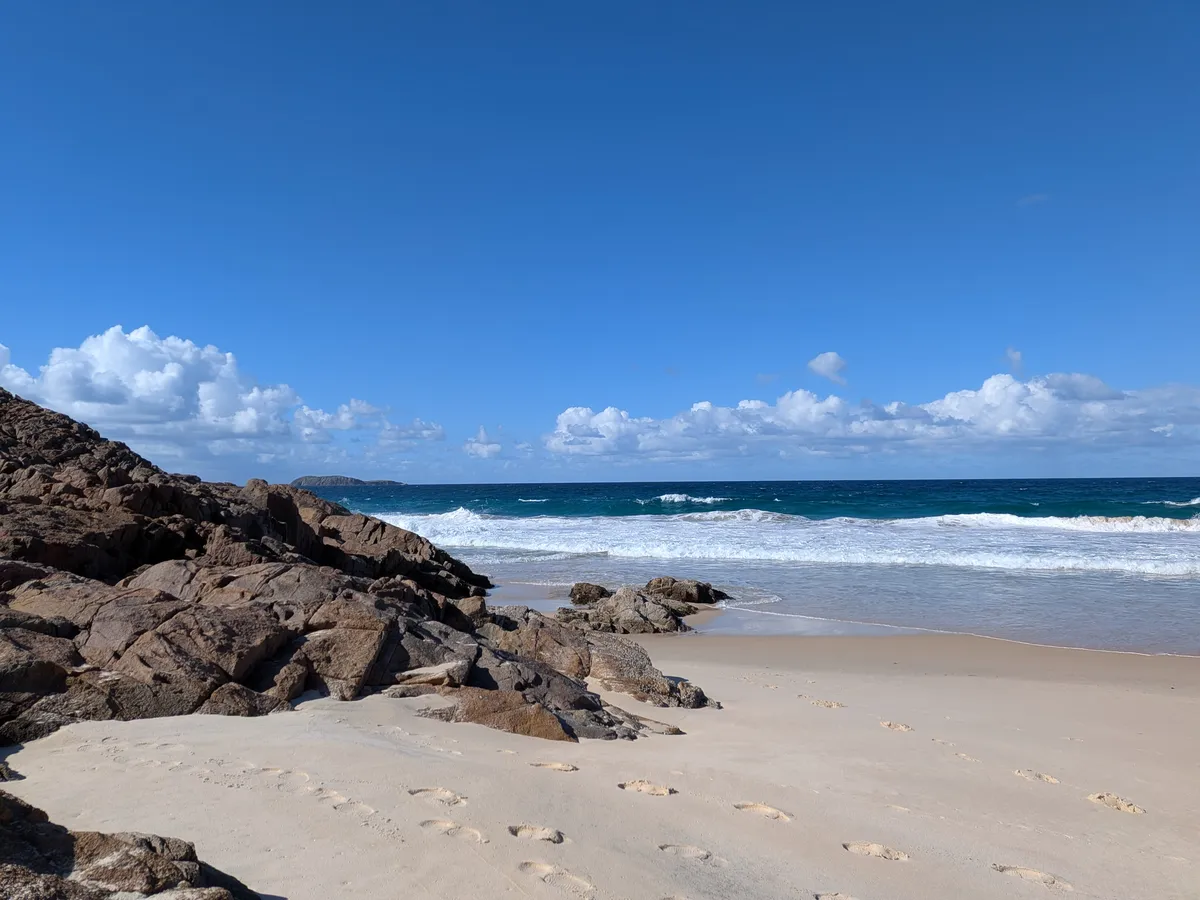
After staying the night at One Mile Beach campsite, we spent the following morning taking a long stroll along the stretching beach. The sun shone and the rocks invited scrambling.
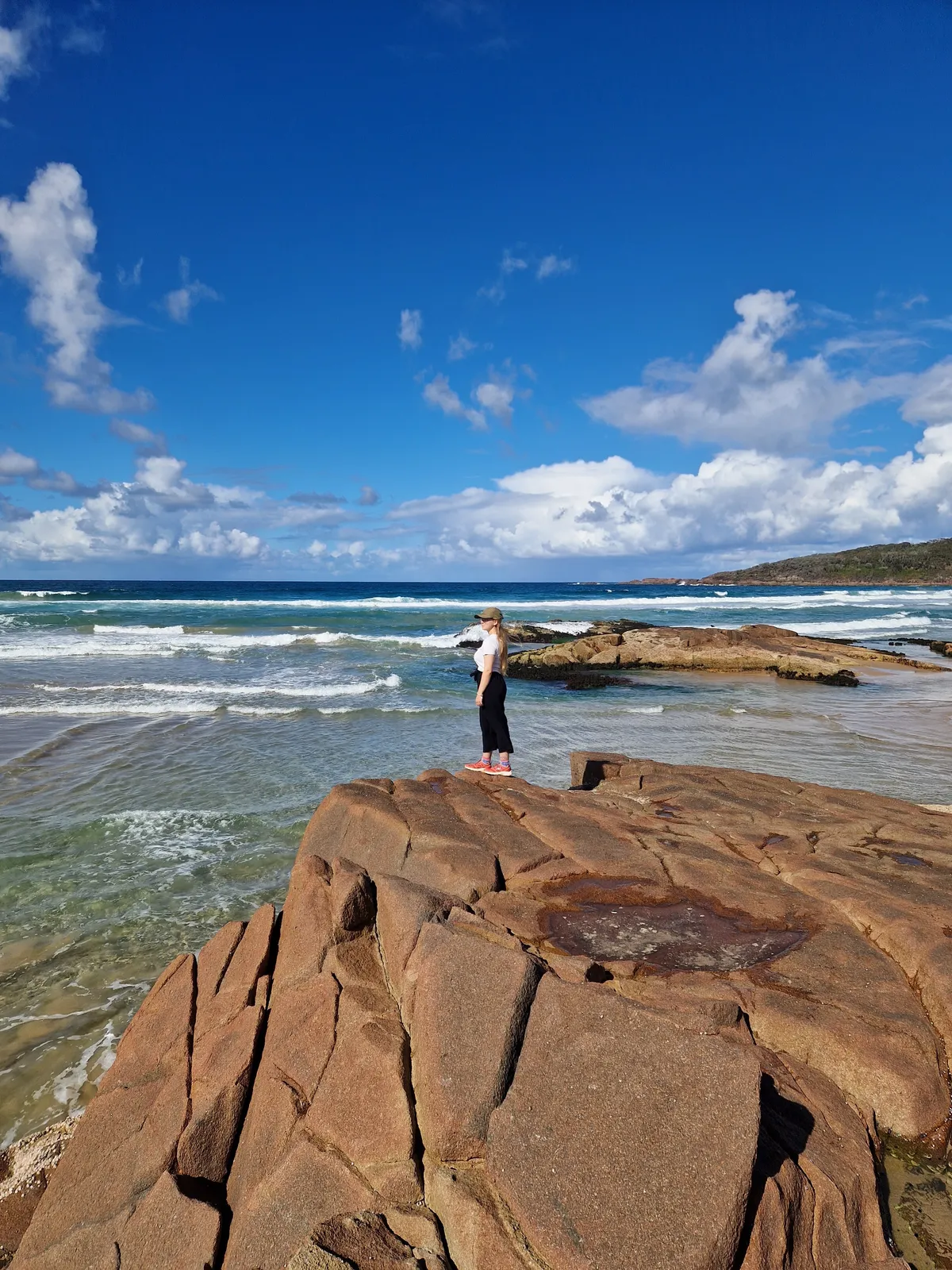
After that, we explored Wreck Beach, which to this day is still one of my favourite beaches. Although we didn't swim in the rough waters here, the beach was perfect. We were the only ones there—it's incredibly secluded—and we enjoyed running between the rocks as the waves flowed in and out around us. We sat on a rock and the scenery inspired me to write a poem there and then in my Aussie notepad.
We skipped Nelson Bay and headed for the Buladelah free camp, where we parked up in front of a pond in the darkening dusk, and gawked at how pretty it was the next morning when we woke up to the view.
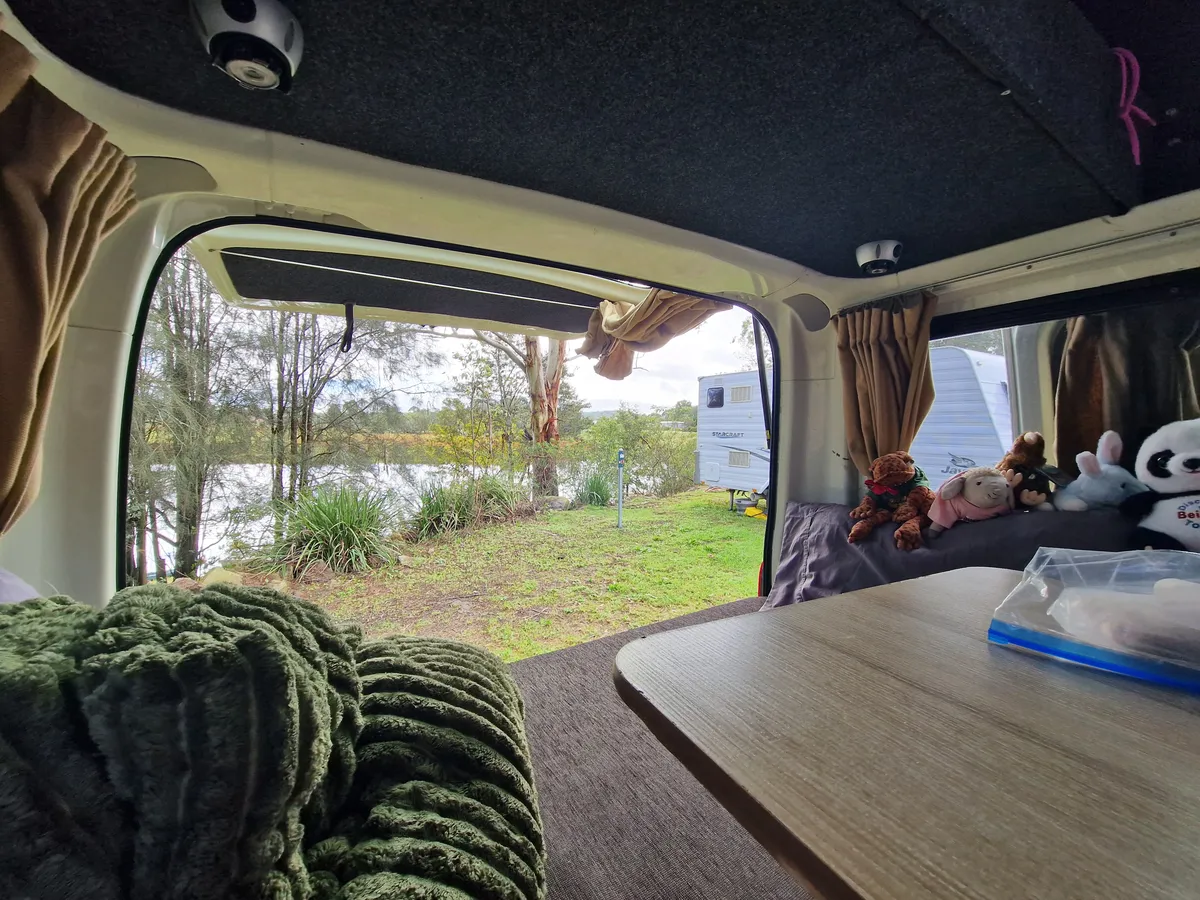
We enjoyed a slow morning here, not having to be out by 10am like the paid campsites. Our next stop was Seal Rocks and Sugarloaf Point Lighthouse, so without further ado we made the journey and found ourselves at one of the world's cutest lighthouses.
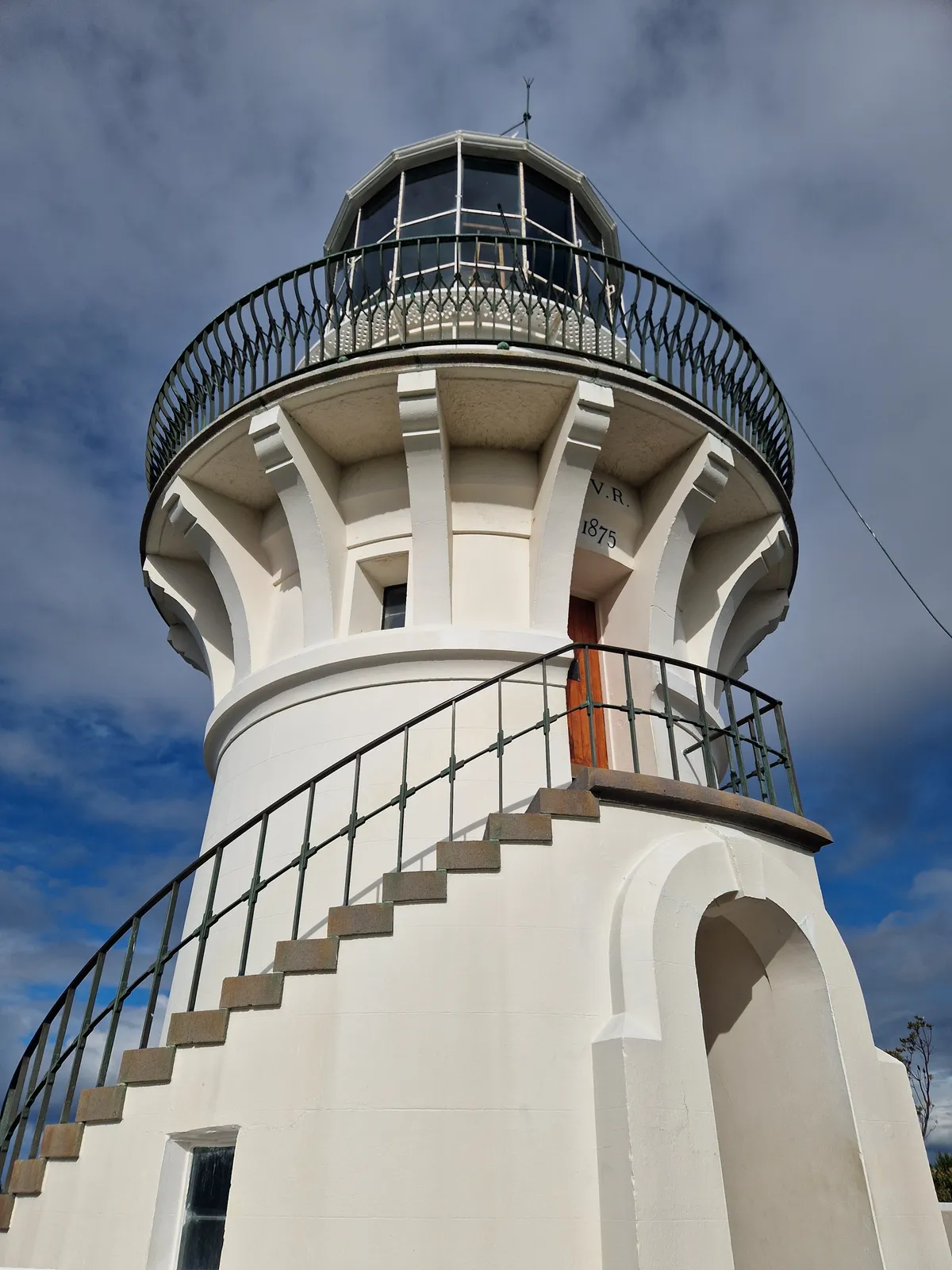
It was a lovely 2.5km walk up to the lighthouse through the bush. When we got there, the scenery was top notch and the lighthouse seriously adorable. We took LOTS of photos!
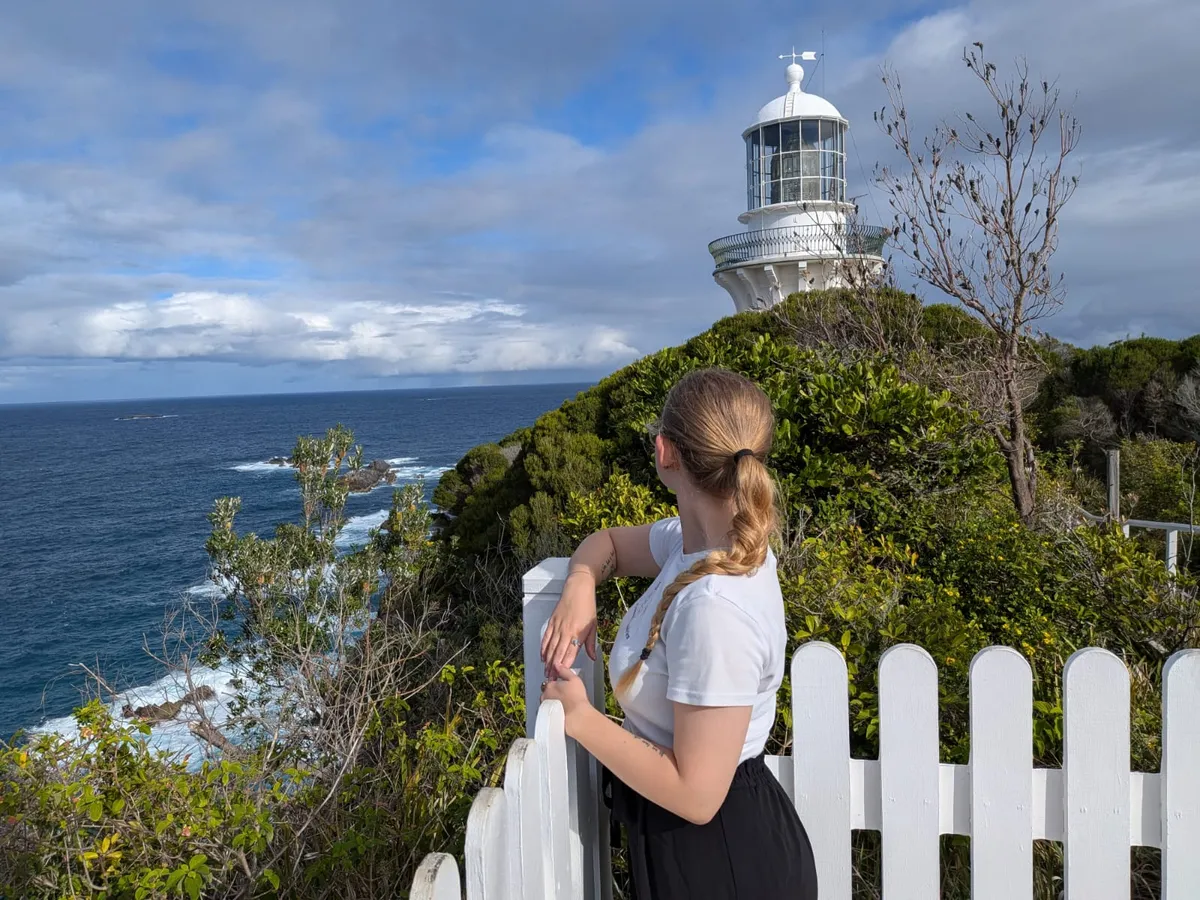
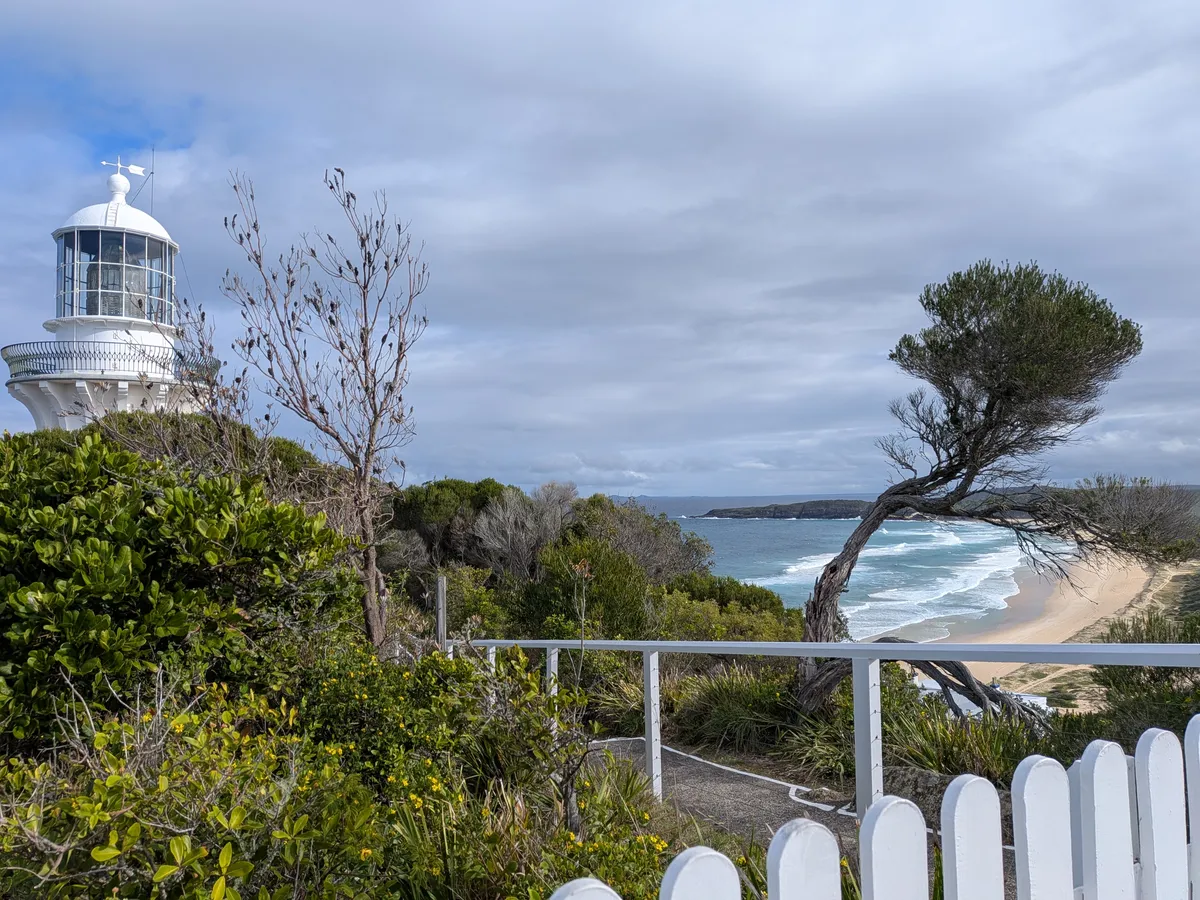
And with an extra scenic spot for lunch, it was truly a successful lighthouse mission.
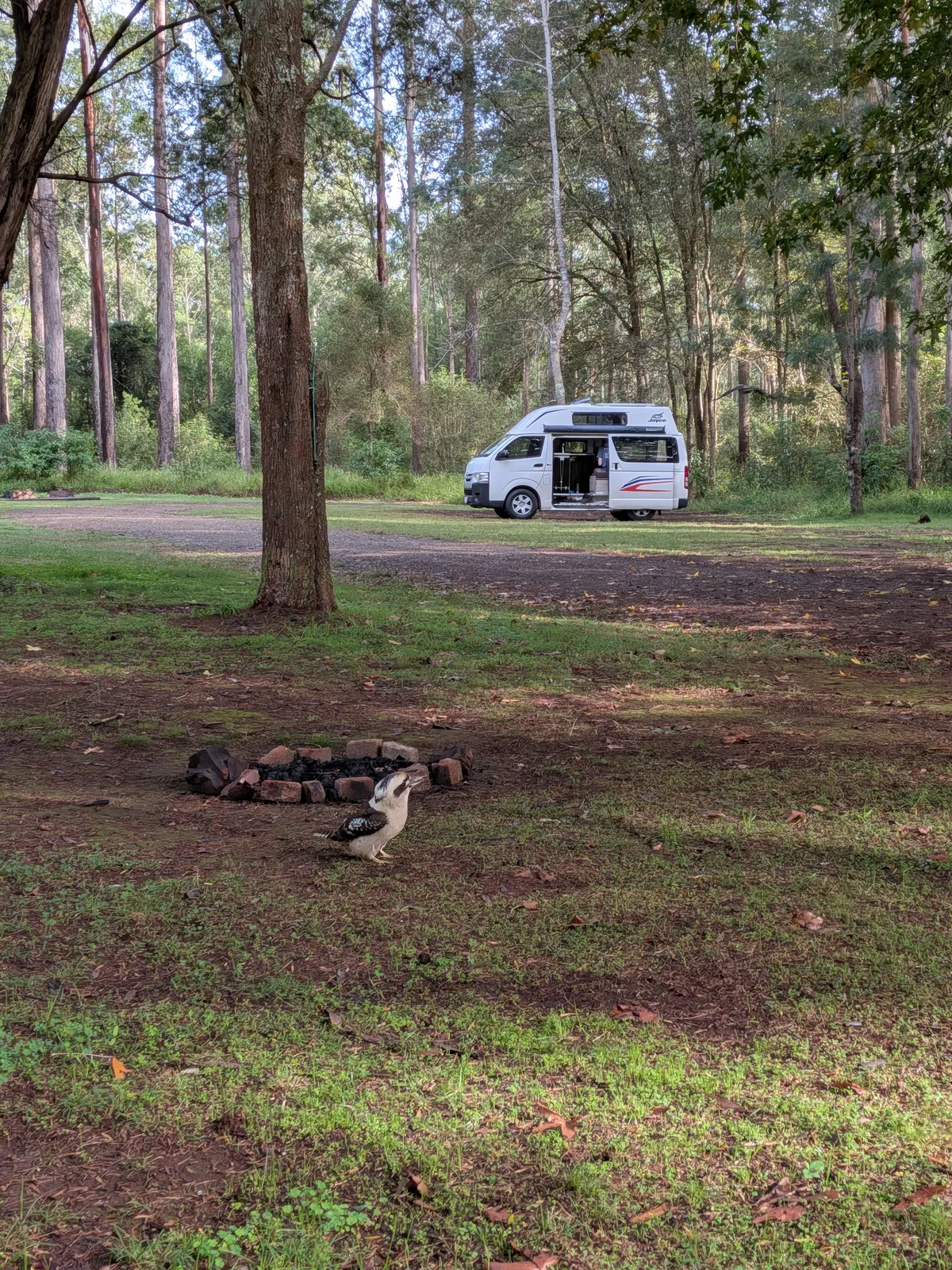
We hit the road once more to drive north—and a little inland—to a remote free campground at Coopernook. With how peaceful and tucked away in the forest this was, it easily became one of the best campgrounds we stayed at, despite the drop toilets... This visiting kookaburra made it all the more special, and was my first close up view of these funny, chunky birds.
It wasn't difficult to spend another slow morning at this campground the next day, listening to the rain pattering on the Wombat Wagon while we did some painting and relaxing. When we decided to get a wiggle on, we headed further north towards Port Macquarie.

Port Macquarie
Our first stop in Port Macquarie was Guulabaa koala hospital and breeding sanctuary.
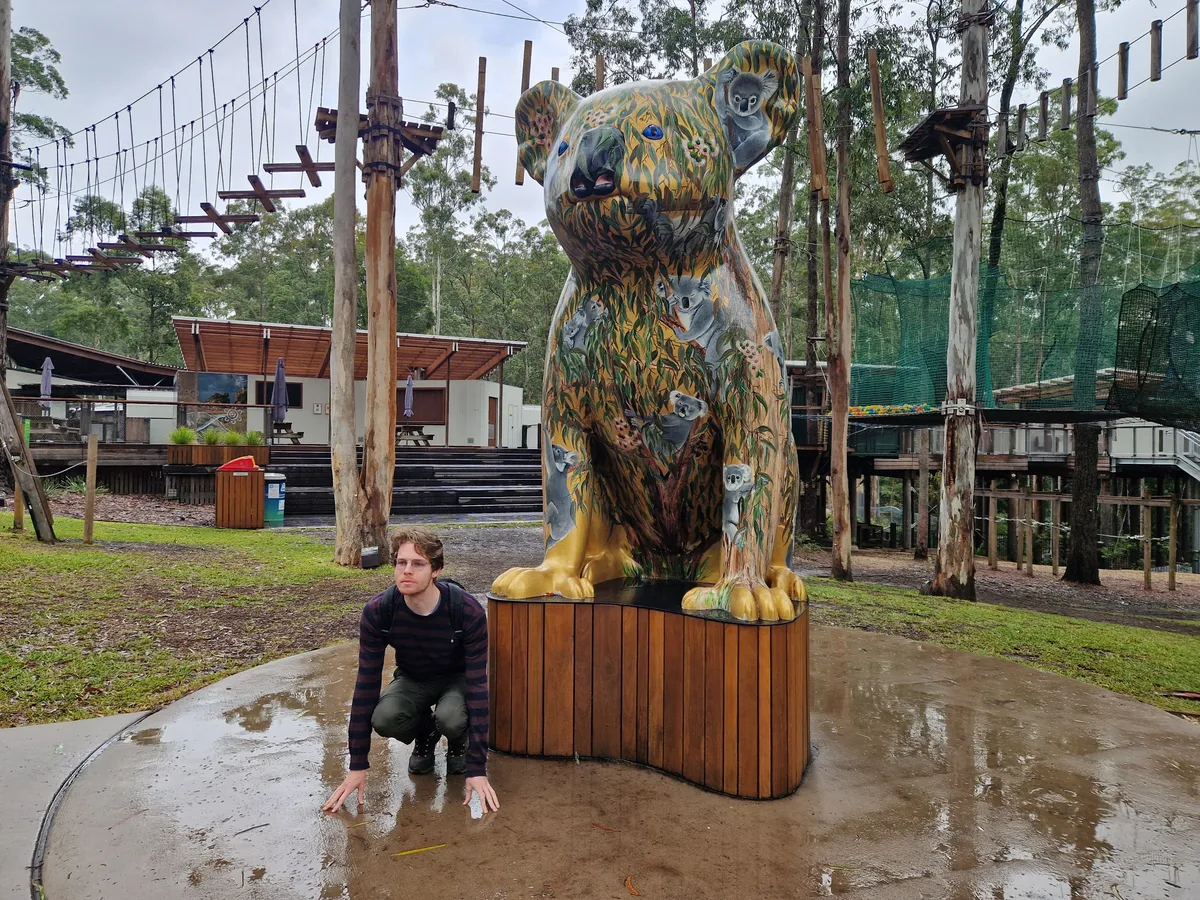
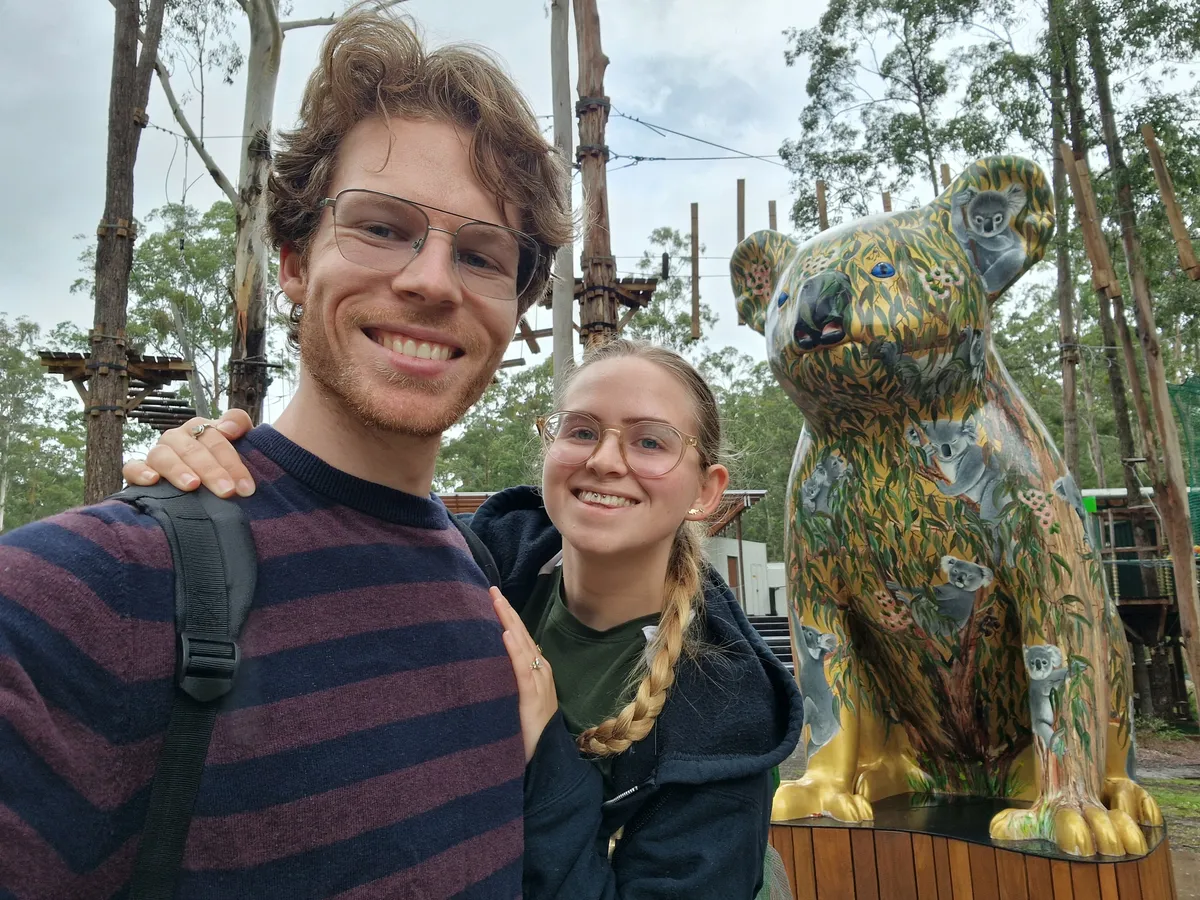
After obligatory photos at the big koala outside the sanctuary, we went inside and saw some adorable grey fluff balls sitting in the trees. Some of them were perched really high up; it was almost nerve-wracking to see the sleeping koalas perched precariously 50m above the ground. The residents on show here are unfortunately unable to go back into the wild due to injuries, and therefore they call Guulabaa their lifelong home.
However, in a hidden part of the sanctuary, a koala breeding programme is in the works. With money raised all around the world for koalas after the tragic 2019/2020 bushfires, this sanctuary has been built to breed healthy, genetically diverse koalas and release them into safe (and secret) pockets of the wild. Even the volunteers at the hospital do not know where the koalas are released, so it truly is a safe haven for them. Hopefully, this will bring their numbers back up after koalas were almost hunted to extinction by humans in the 1920s, and as they continue to face ongoing threats in the form of habitat destruction and introduced predators.
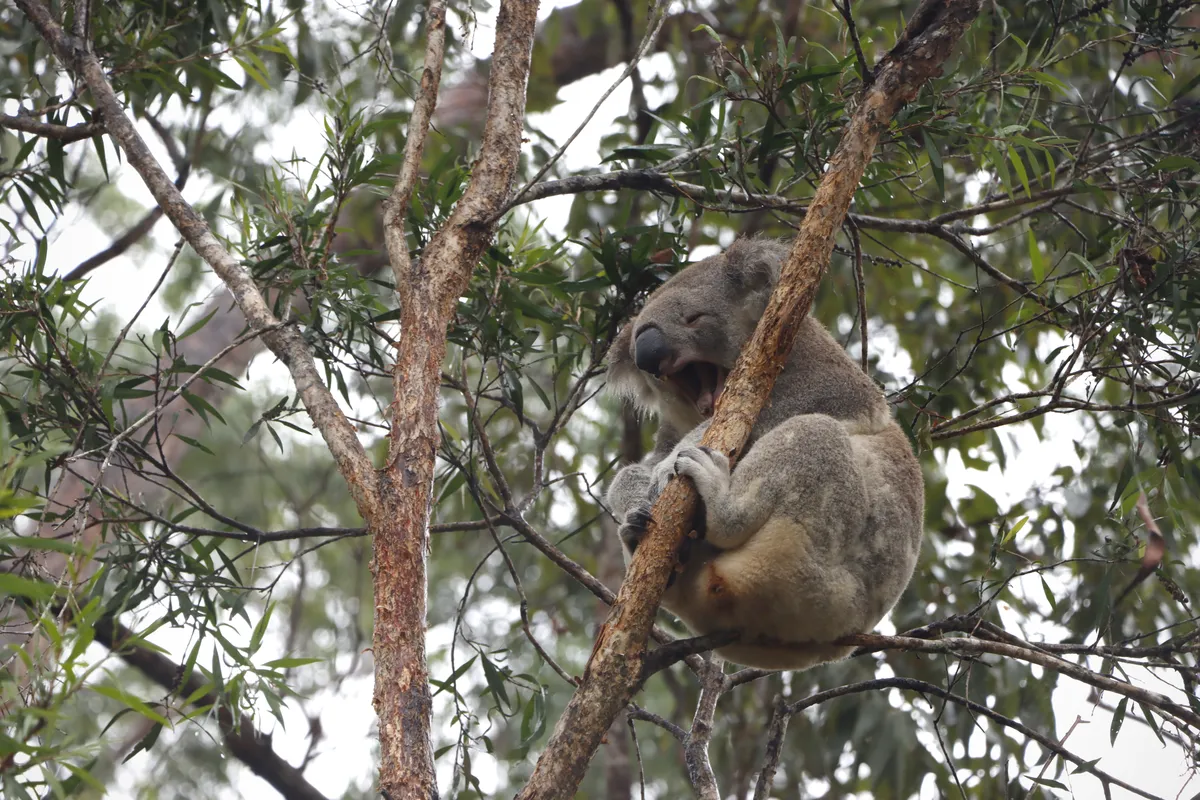
Just look at the size of that branch he's straddling! How he can snooze in that position for hours on end is perplexing.
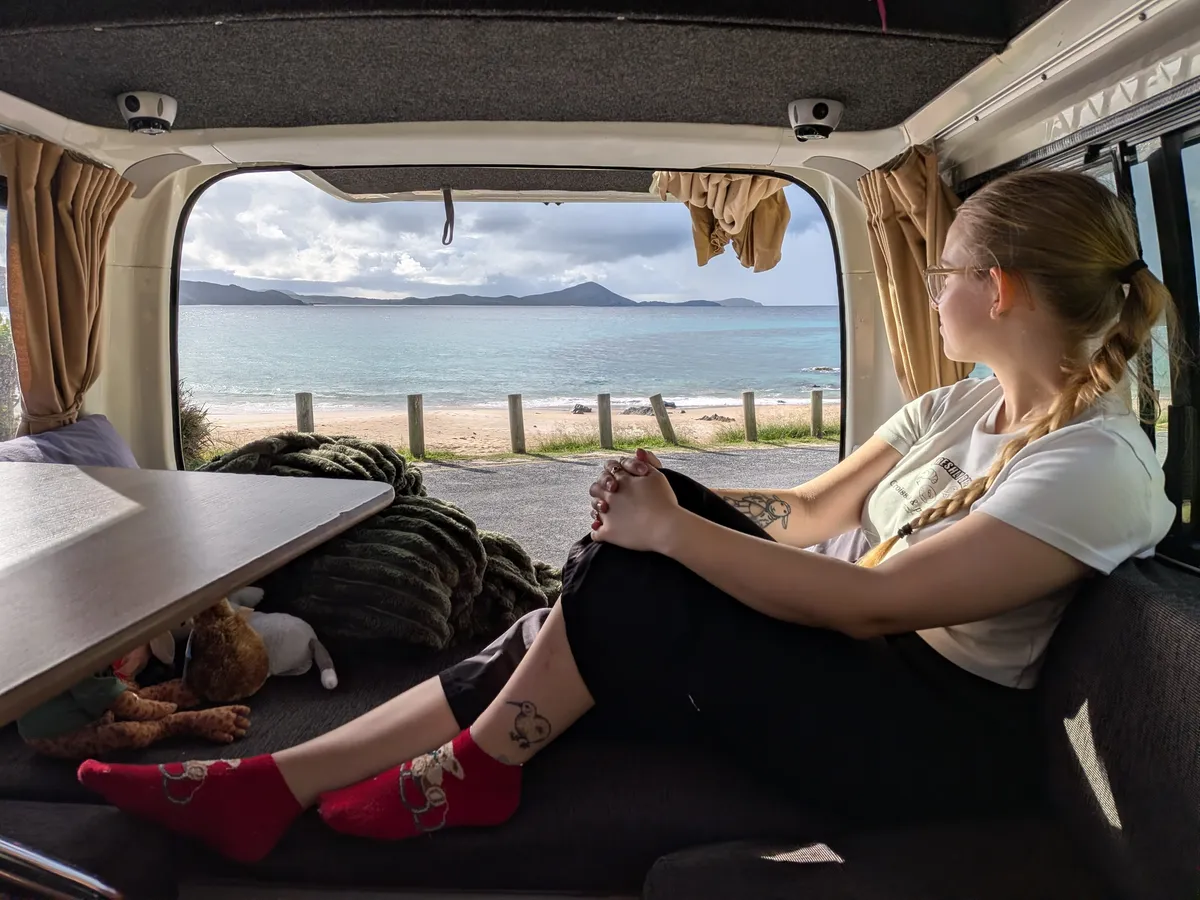
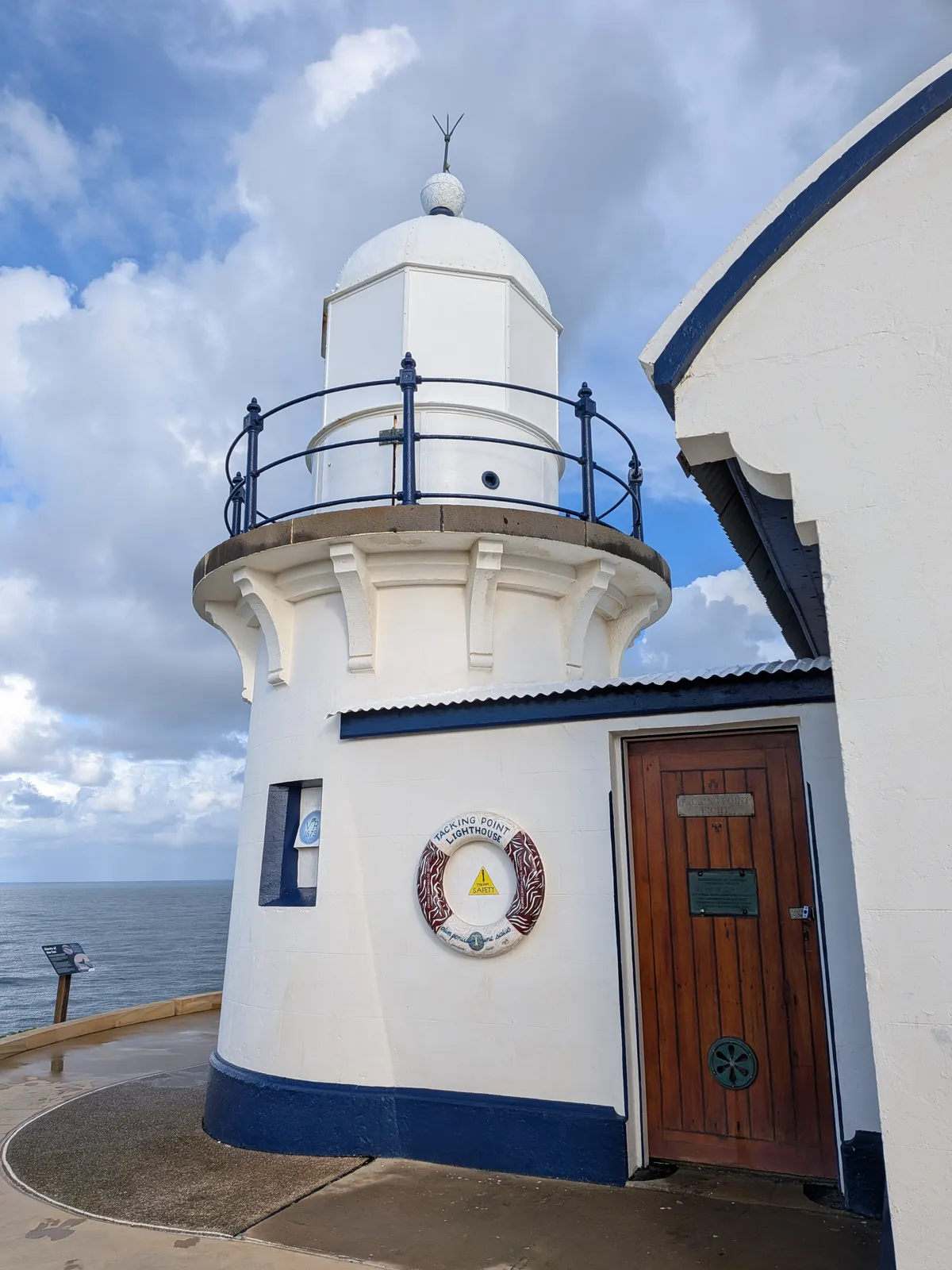
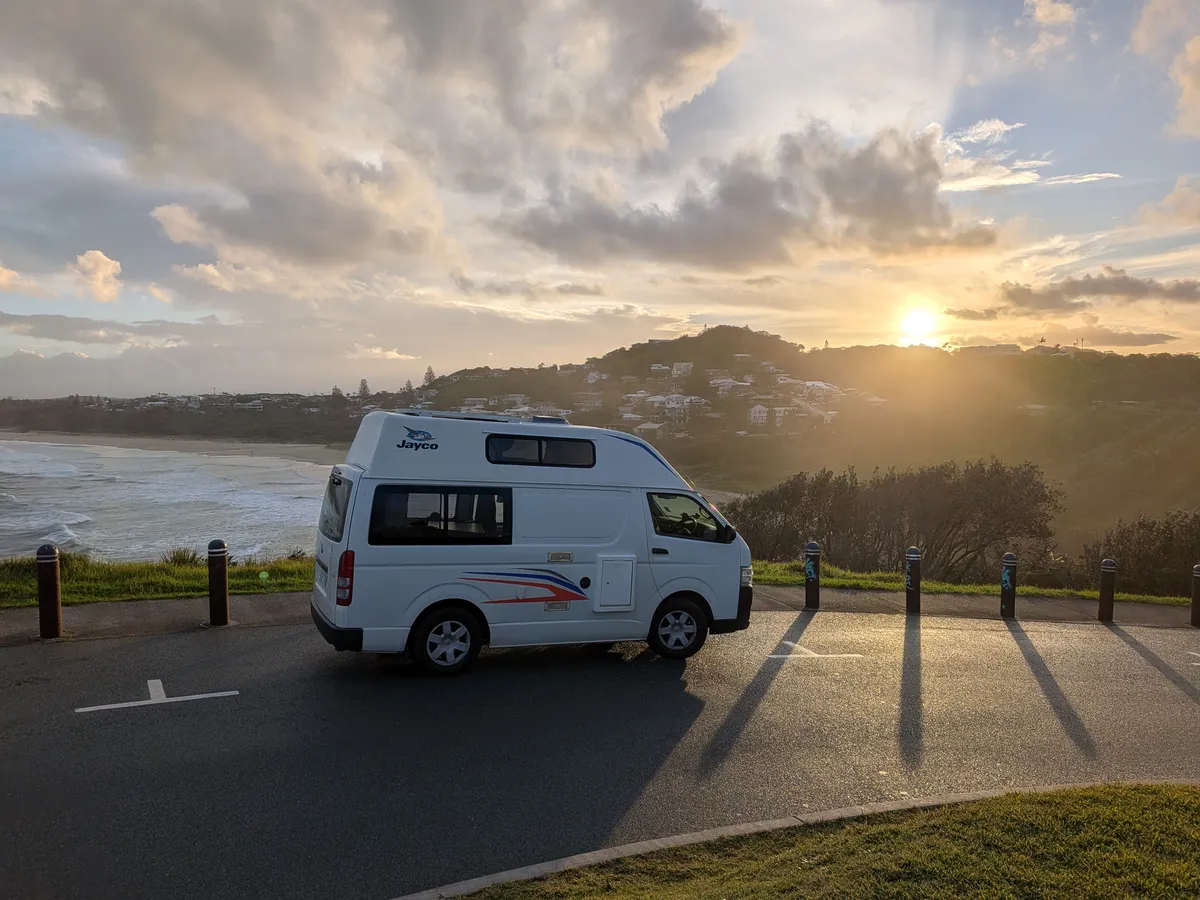
After our koala-ty time with the koalas, we drove through the rain to Tacking Point Lighthouse and parked up with another incredible view out the Wombat Wagon windows.
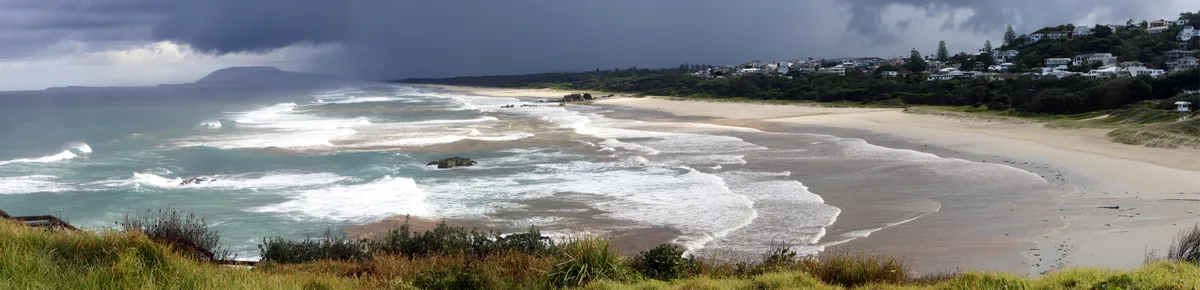
The mighty headland juts out into the sea and gave us 360° picturesque views as we strolled around, hopping from viewpoint to viewpoint. Despite the dramatic scenery, the lighthouse itself was once again rather cute, small and quaint. We kept our eyes peeled for migrating humpback whales but didn't see any; we must have been travelling a few days ahead of the whales as they reach Australia's east coast in mid-May every year. Likely they were making their way north just behind us as we, also, travelled up the coastline.
We followed the path around the headland into surrounding bush and made this lighthouse visit into a 2km walk. The palm trees and post-rain humidity made it feel almost like a rainforest. The sun finally shone over the beautiful scenery as we hugged the coastline and continued to look out across the sea.
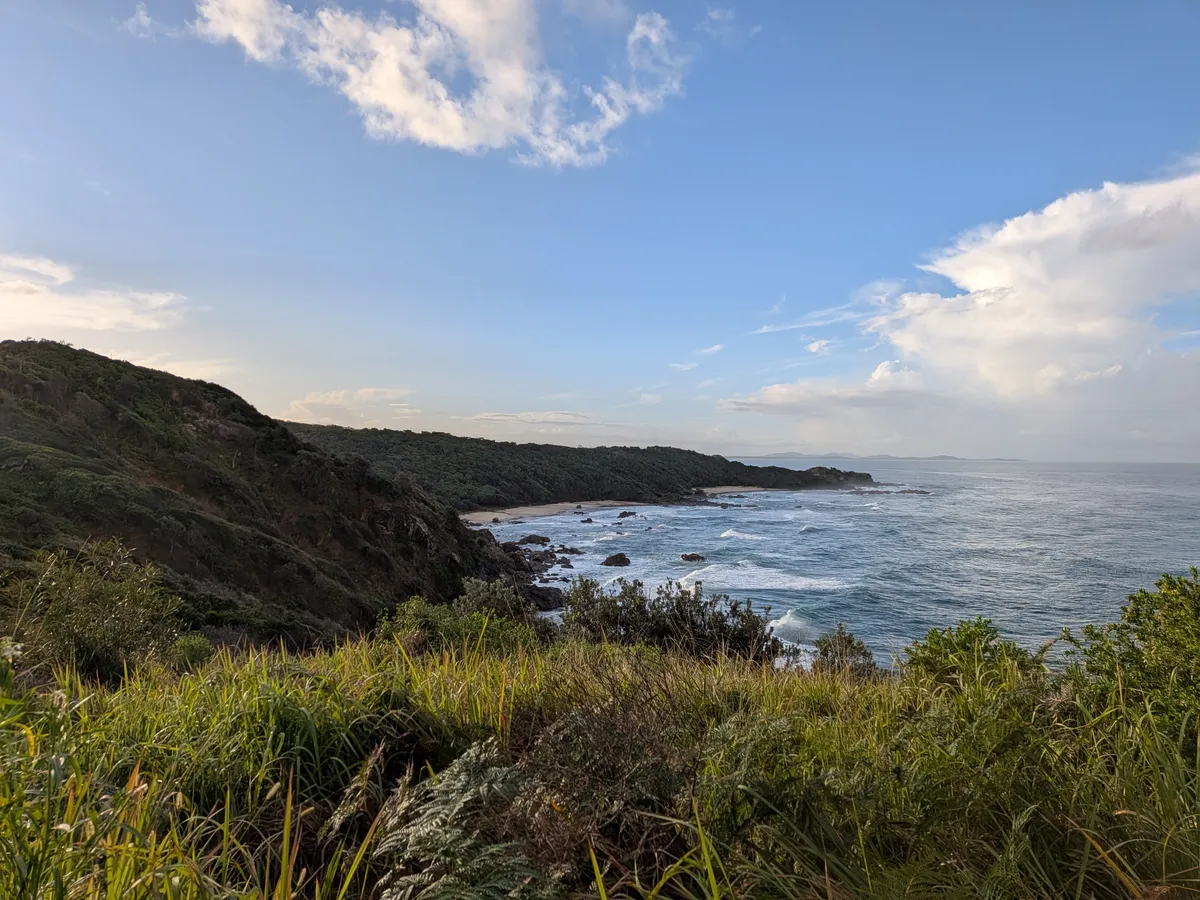
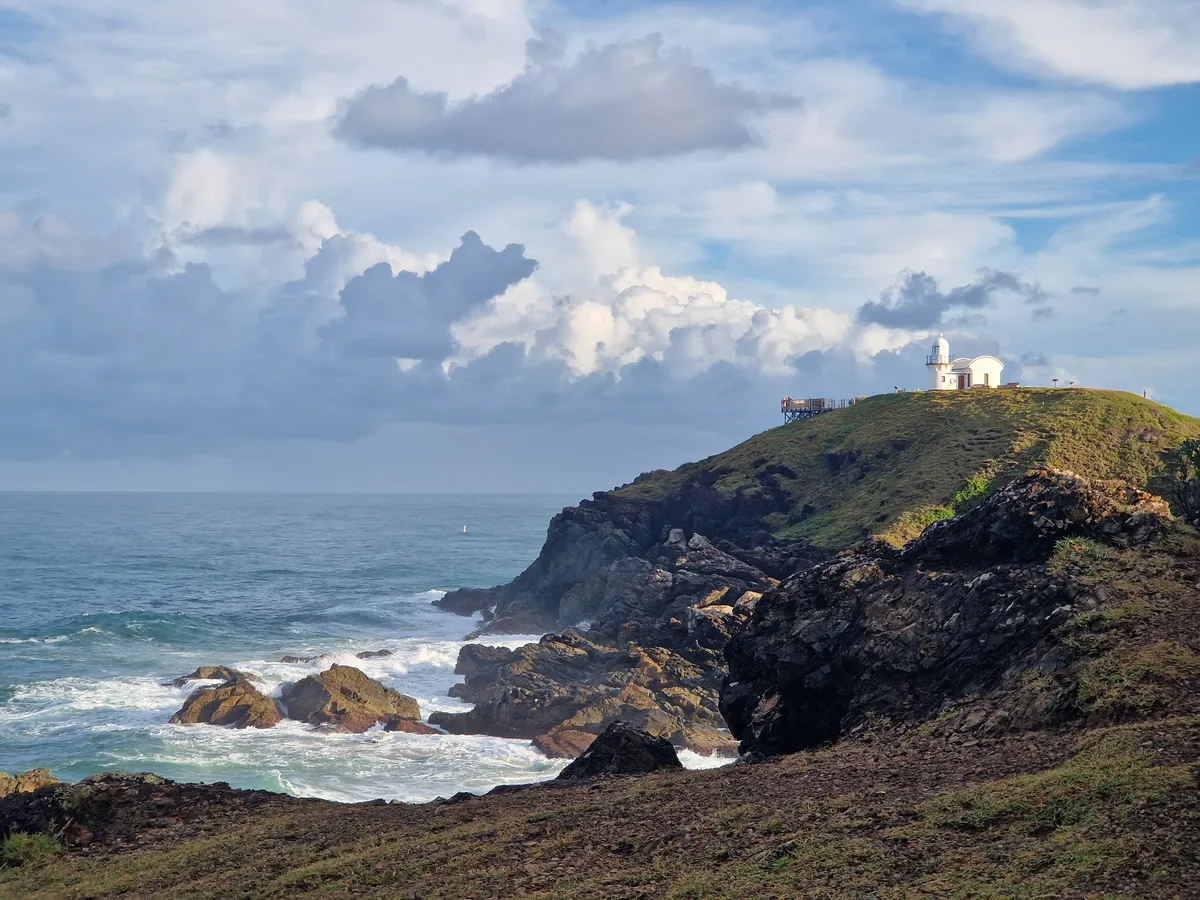
James was in his element skimming stones in the small bay and searching for seashells, while the lighthouse glimmered in the distance.
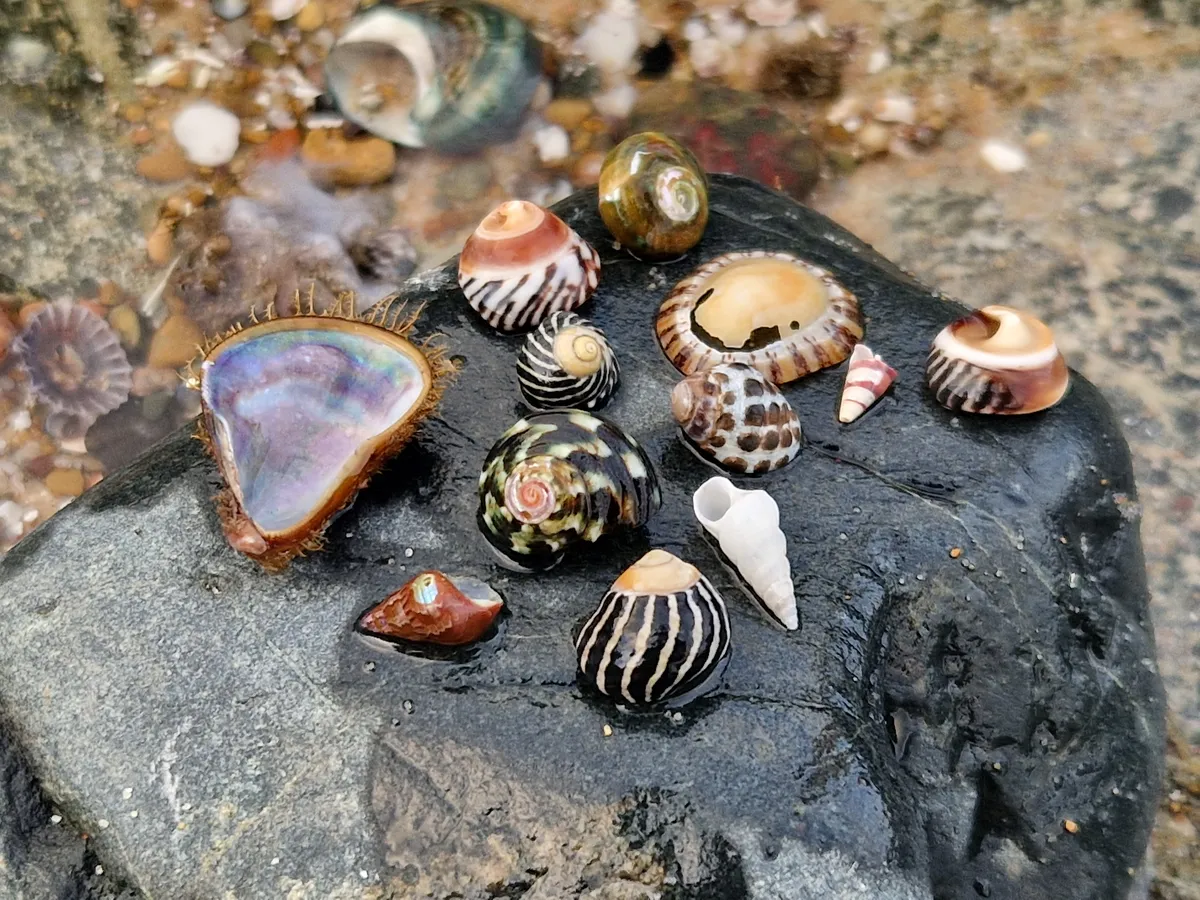
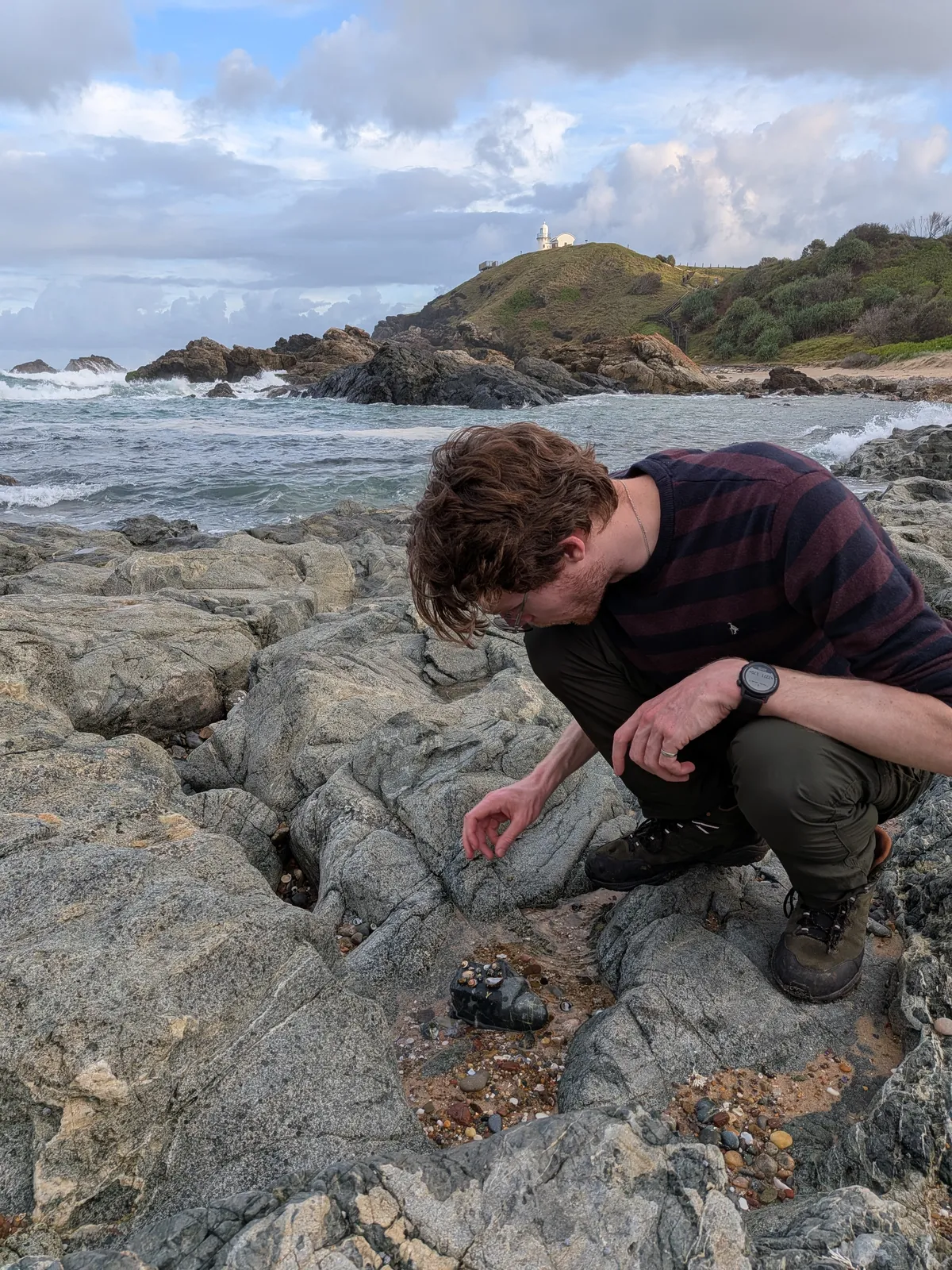
We made it back to the Wombat Wagon to catch the last of the setting sun before it lowered itself behind the distant hill. Another successful stroll completed, and off we went to our campsite for the night.
Coffs Harbour
We started our time in the Coffs Harbour region with the Bundagaree Rainforest walk which led us through a strip of rainforest parallel to Bongil Beach, before hopping over onto the sand and tracing the path back again. This 6km walk was the perfect way to escape the rain, as the rainforest canopy protected us from above and we meandered our way through the humid, dripping trees.
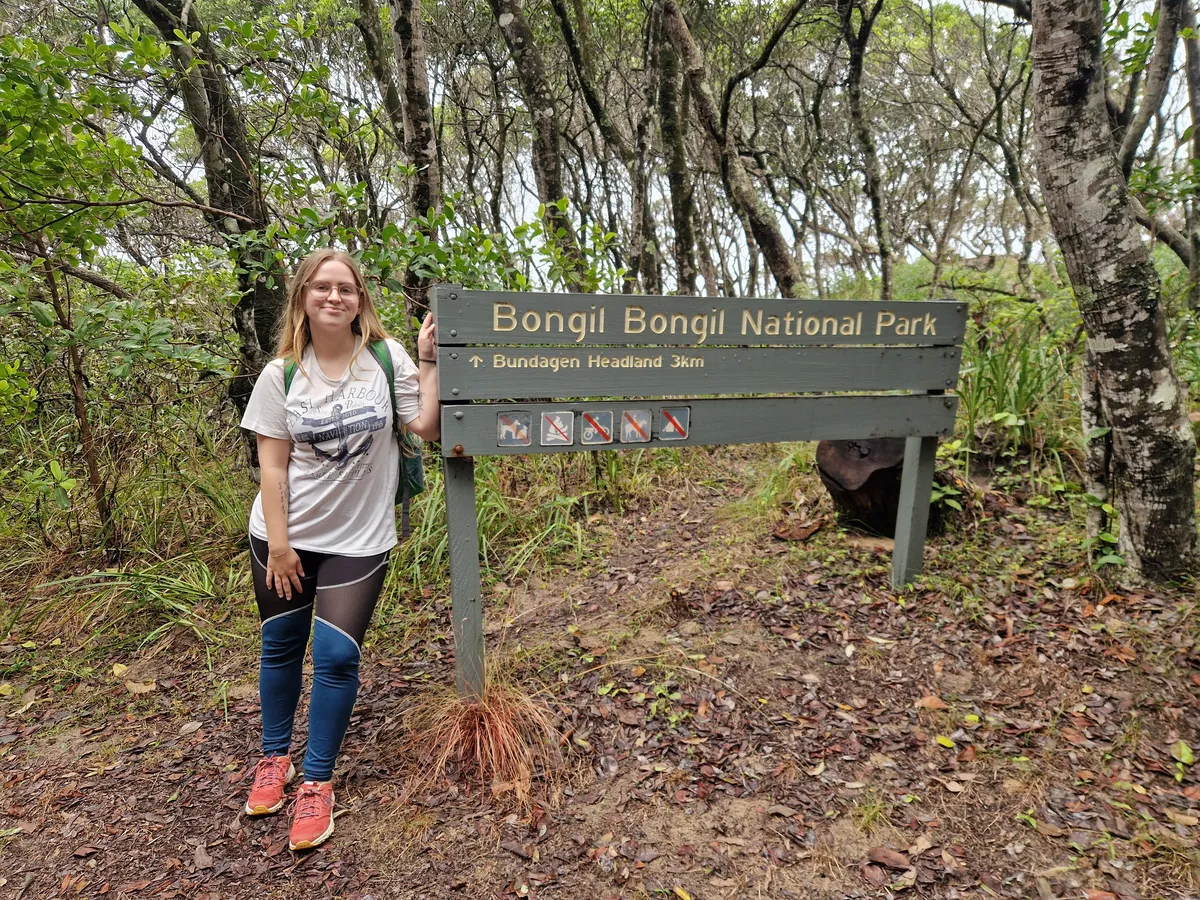
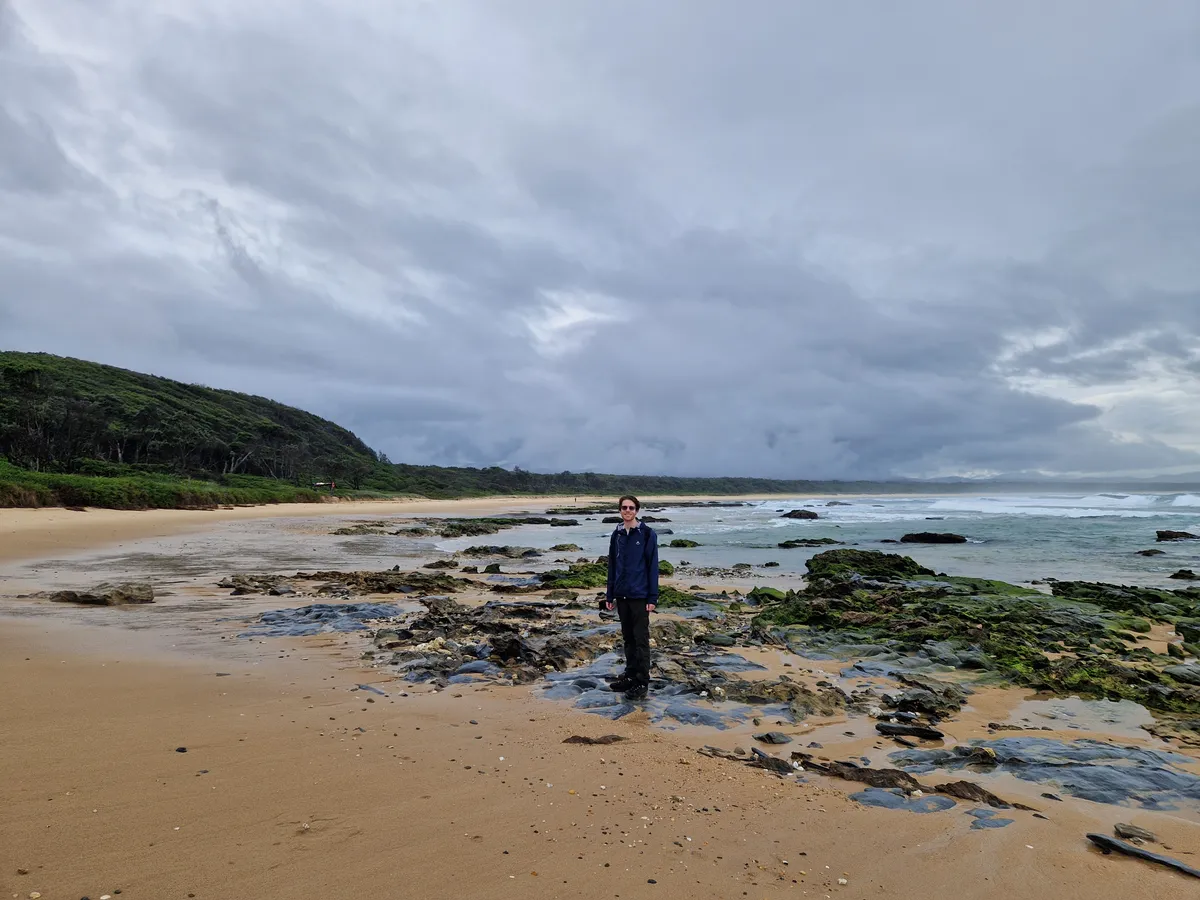
By the time we emerged onto Bongil Beach and walked back in the direction we had come from, the rain had stopped once more and we cooled off under the grey clouds while the sea breeze swept over us.
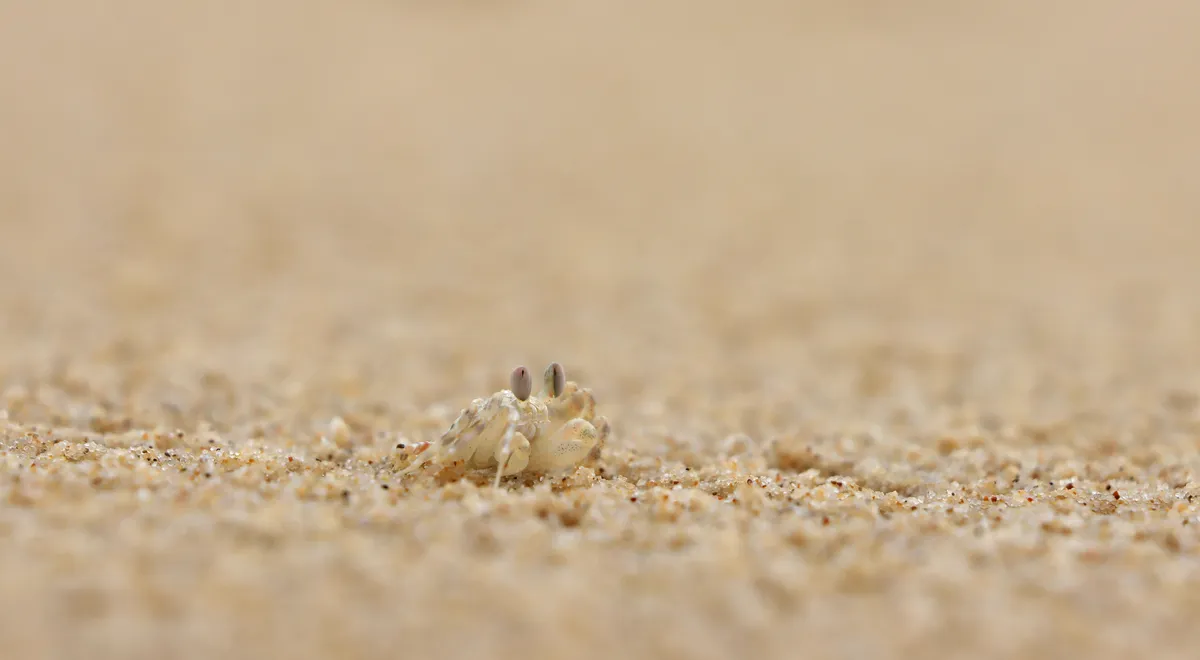
We avoided hundreds of these tiny sand-coloured crabs as they fled between our feet the entire way down the beach. The little critters were scuttling around and popping into miniature holes in the sand.
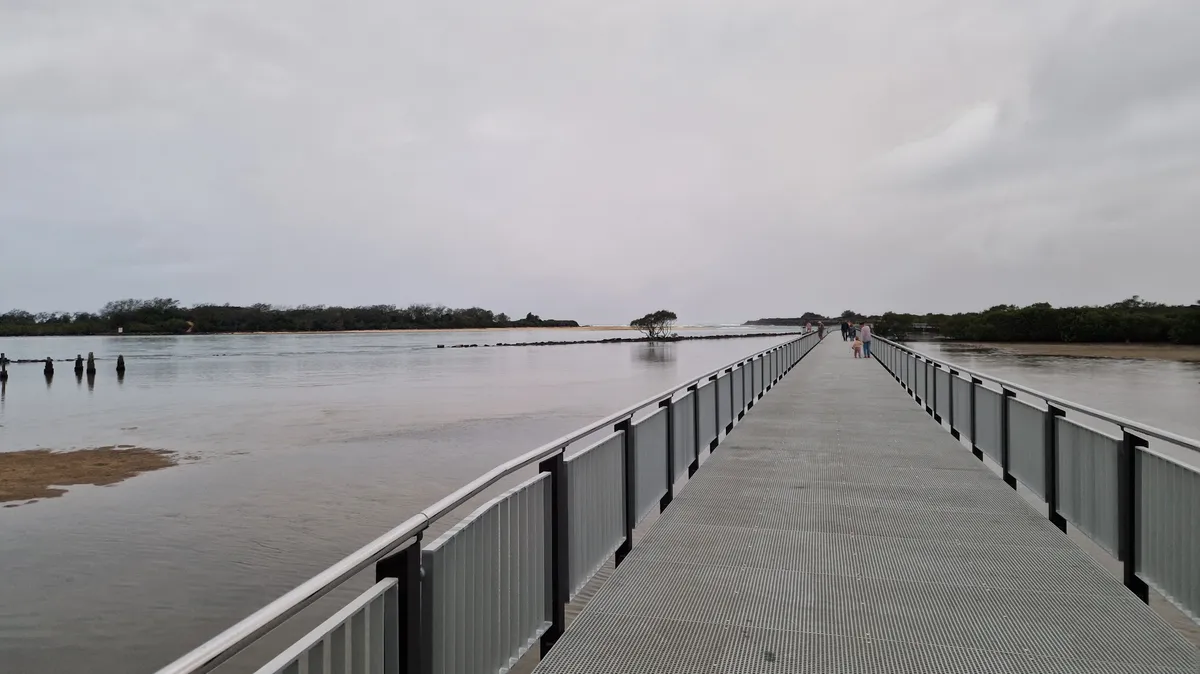
Afterwards, we headed to the Urunga Boardwalk for sunset. Although the clouds sadly hid any golden hour glow from our sight, we did enjoy a quick walk up and down the boardwalk and saw a few stingrays in the water below. We didn't get any photos, but we did get this video:
They're a lot easier to see when they're moving!
We headed to Chicken Joe's free camp slightly inland from the town of Coffs Harbour where, supposedly, a chicken named Joe lives. We spent two nights here in the wooded free camp and, although we didn't spot Joe, it was the perfect place to stay in peaceful forest close to Dorrigo National Park. The following day is when we headed to Dorrigo. However, this was such an incredible place and truly the perfect day that it earns a blog post all of its own; stick around for that coming soon! In the meantime, we continued with our adventures in Coffs Harbour but, unfortunately, so did the rain. Our plans to explore Muttonbird Island and Sealy Lookout were ultimately rained off, so we headed to a nice, dry, indoor cartoon gallery in a WWII bunker instead.
The gallery was showcasing this years' Bald Archy Prize: a satirical portrait competition with an excellent winning piece by Mark Davis. Most of the portraits featured political figures and references, with a few caricatures humiliating Erin Patterson, a well-known Australian murderer whose weapon of choice was deathcap-filled beef wellingtons and whose victims of choice were unsuspecting family members. Being in a WWII bunker was pretty cool, and the gallery-stroke-museum included some historical information about the bunker and its use for housing communication equipment in the war. Although we didn't understand a large portion of the Aussie references in the cartoons themselves, it was still interesting to peruse this underappreciated form of media in a dedicated gallery; some of the pieces were really impressive.
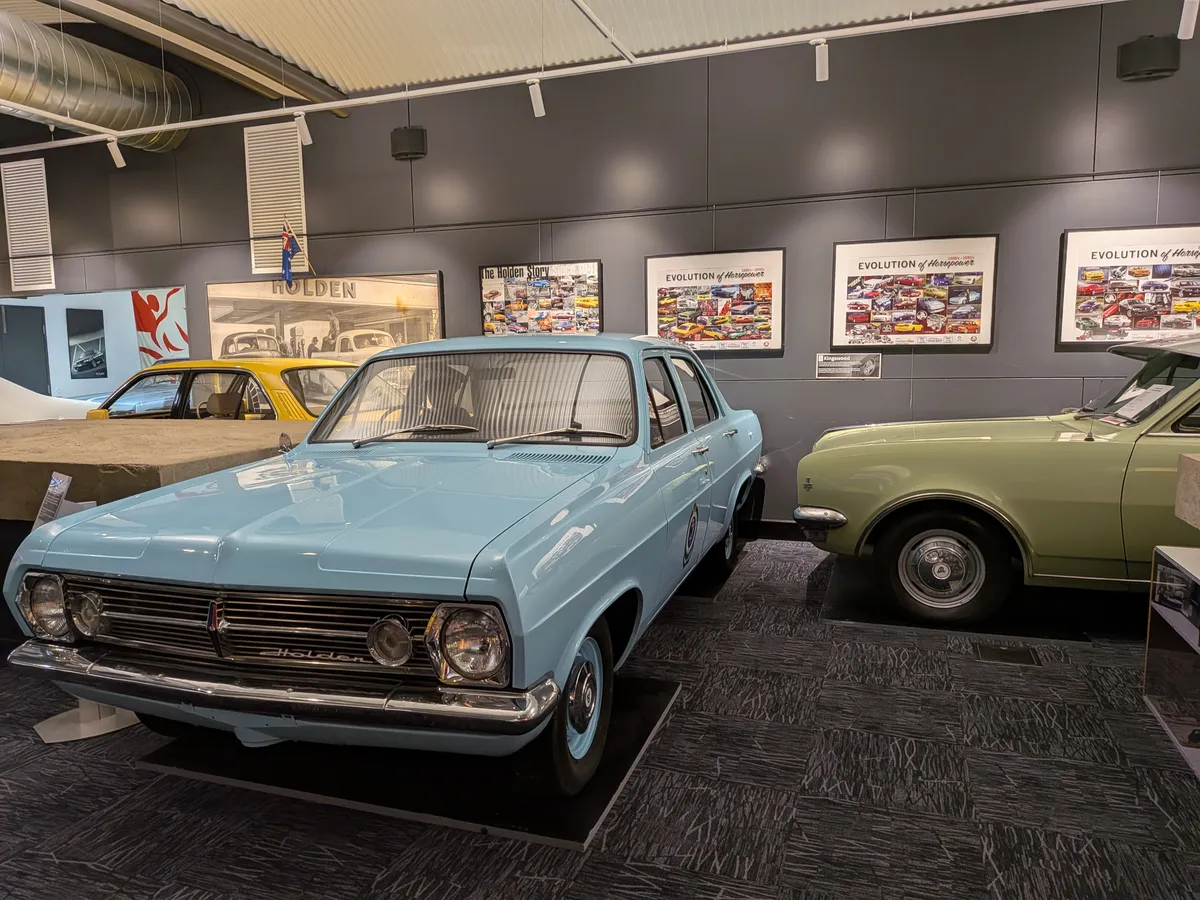
As if cartoons and WWII history weren't mismatched enough in this curious place, we went upstairs and found ourselves in a Holden car museum, too. Old cars are very much up our street, so we thoroughly enjoyed walking around these distinctly Australian cars of yesteryear. Needless to say we were picking out which ones we want to own, and wondering how they managed to fit so many cars in the upstairs of a WWII bunker.
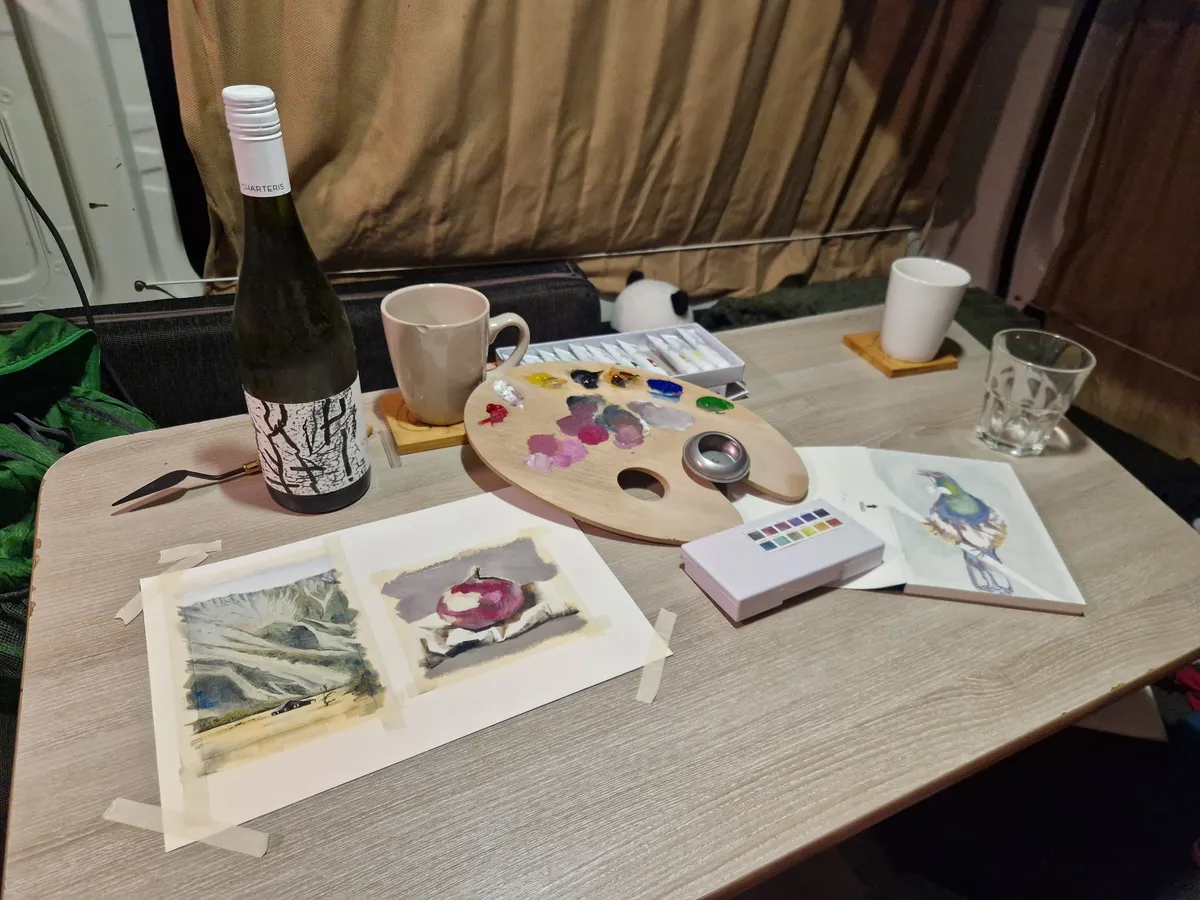
With our rainy day activity completed in Coffs Harbour, we drove through another shower to our next campsite, and settled in for the cosiest afternoon of all time. The rain pelted down heavier than ever, drenching us every time we ran to the campsite toilet. But once we were showered, fresh, and dry once more, we devoured a bottle of wine while painting, chatting, and enjoying the sound of the rain on the roof. This was one of my favourite days in the Wombat Wagon and proves that rain does not have to ruin everything.
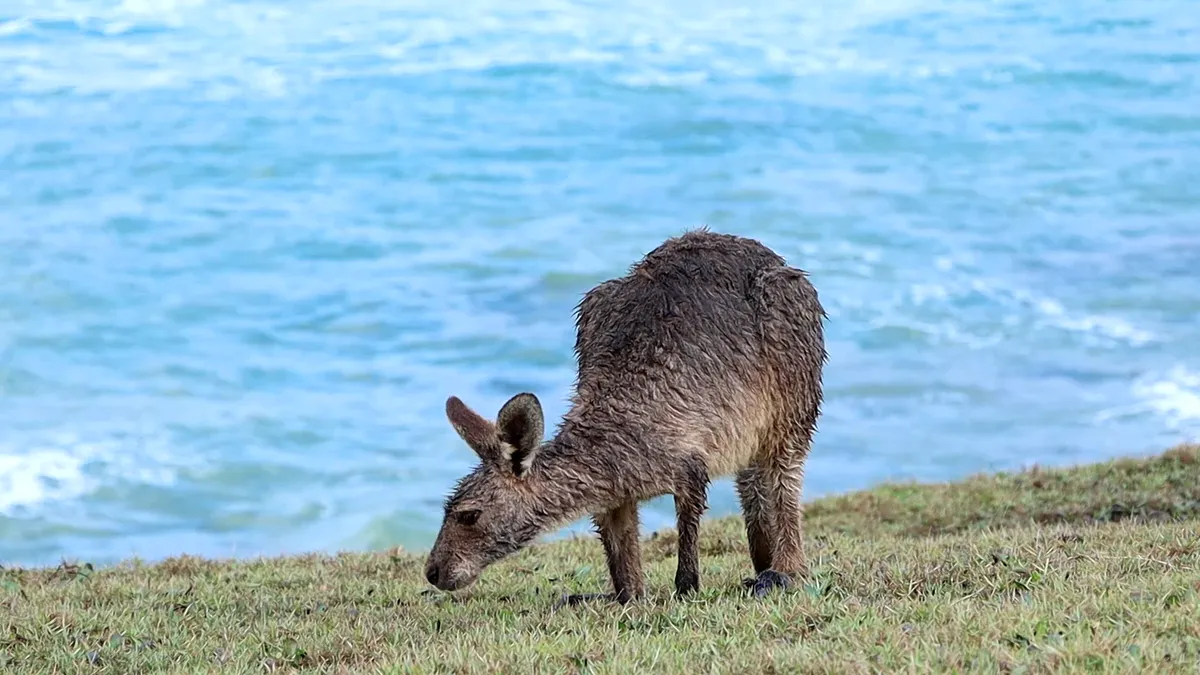
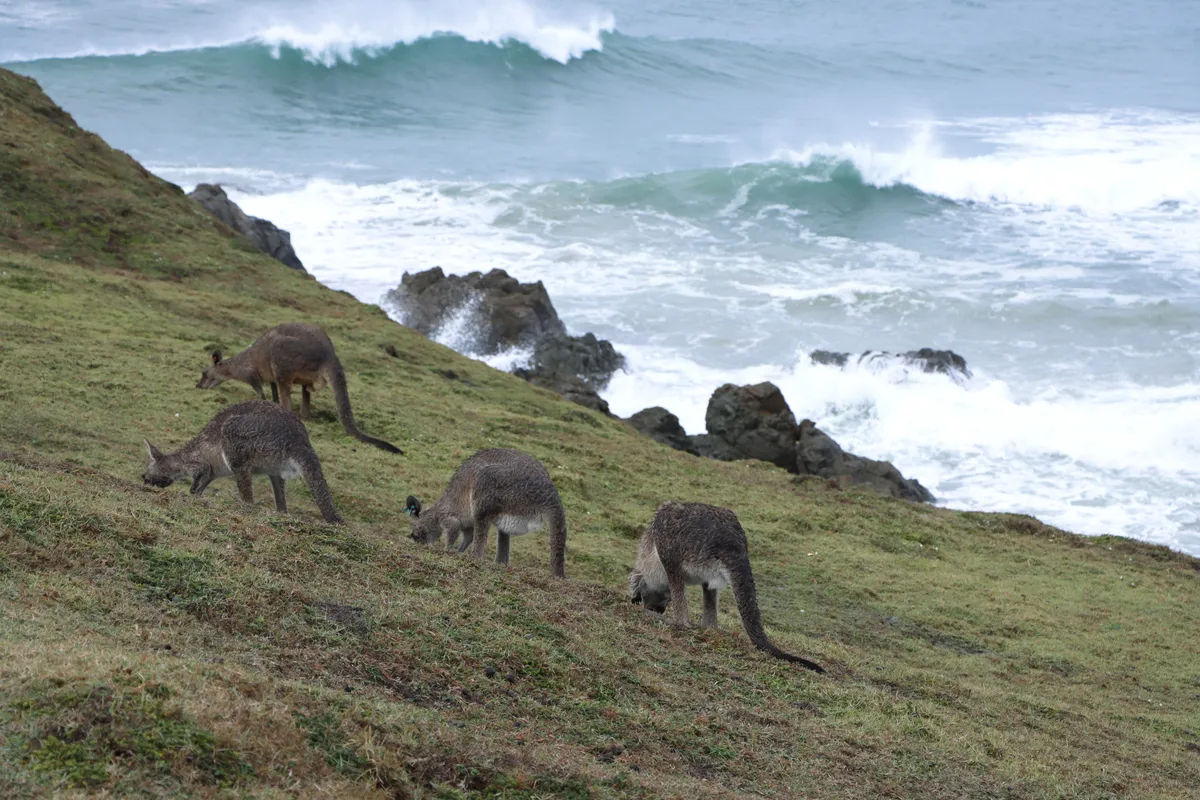
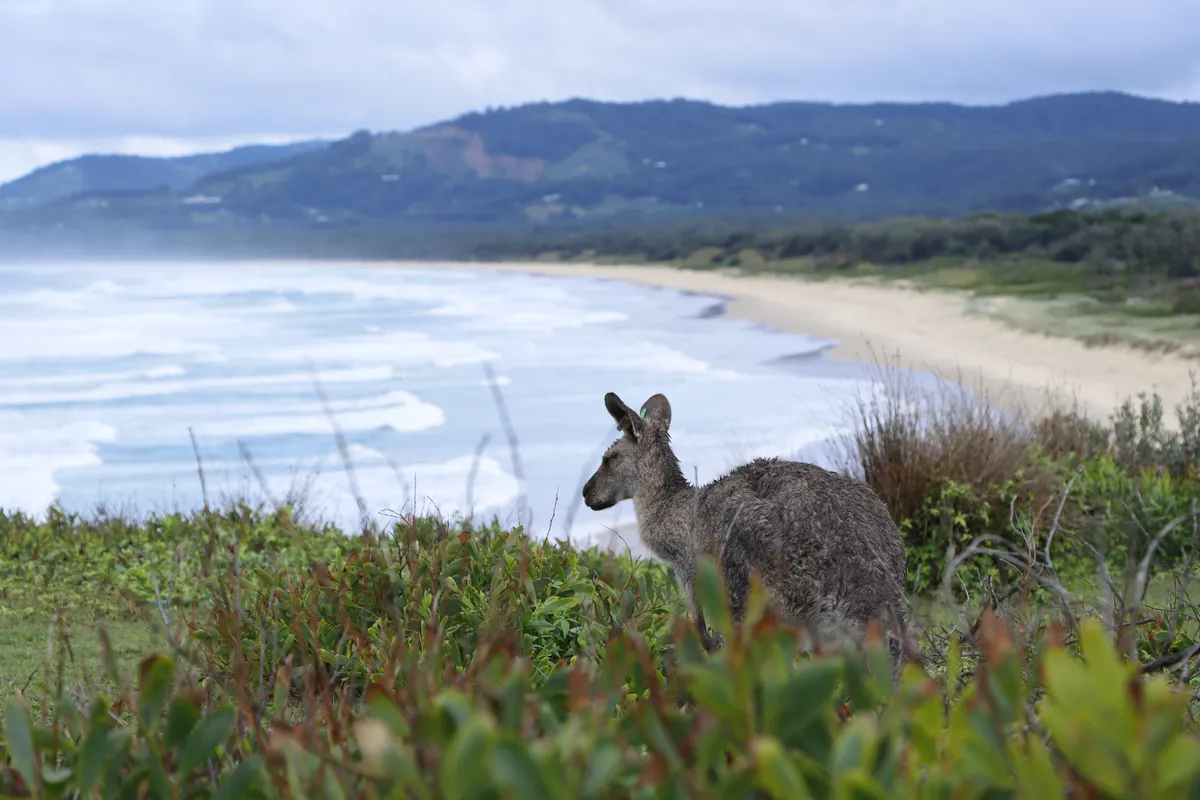
The next morning, we travelled just a little further north of Coffs Harbour to Look At Me Now Headland, famous for its wild kangaroos. We'd already seen a small handful before we even parked up. We walked the short 1.3km loop round the headland to experience close up kangaroos grazing in front of a dramatic background of ocean. Of course, we stopped every few steps to take more and more photos.
If you've ever wonder what a kangaroo looks like after it's just been rained on:
And here are some more which have dried off and are looking quite majestic in their picturesque habitat.
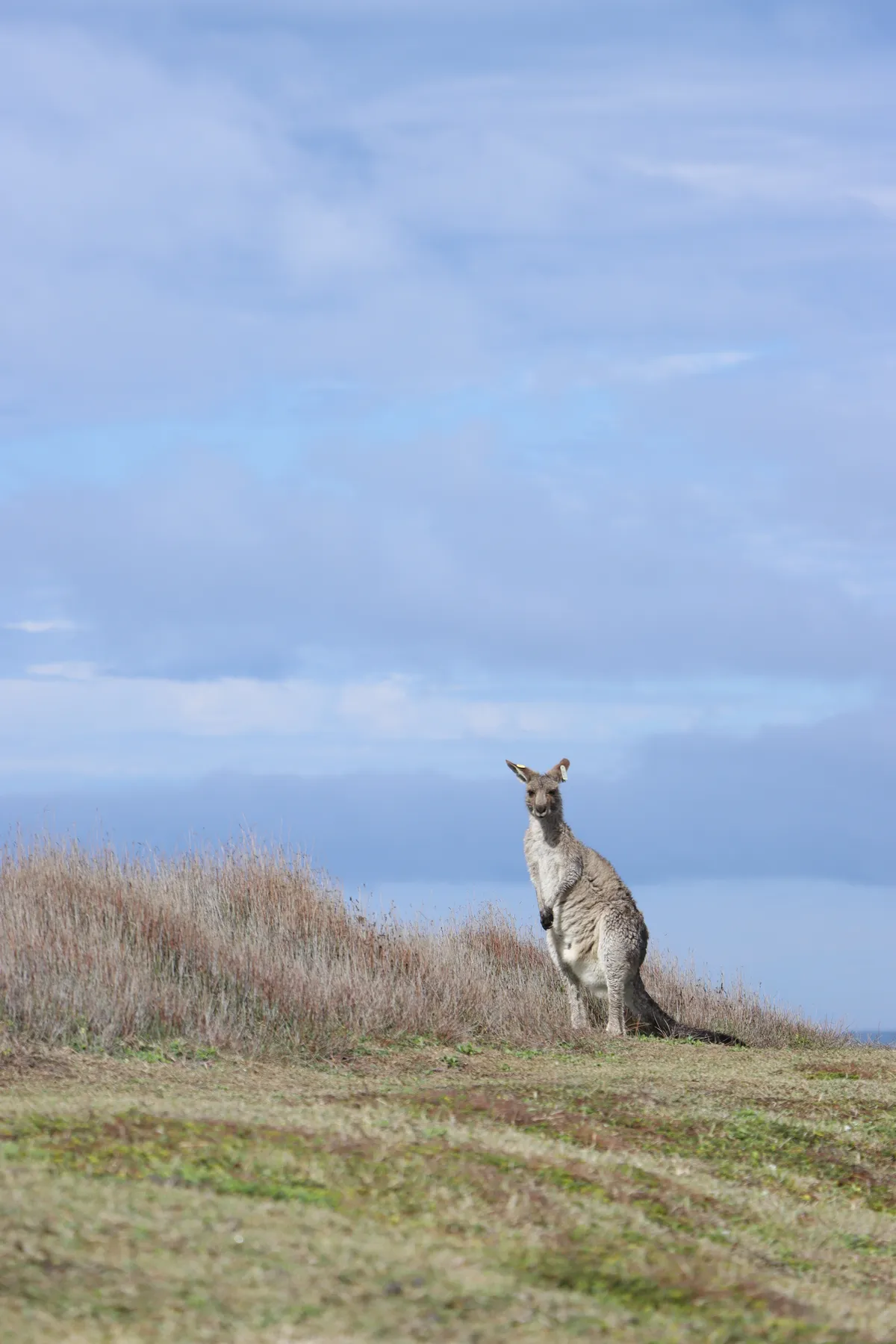
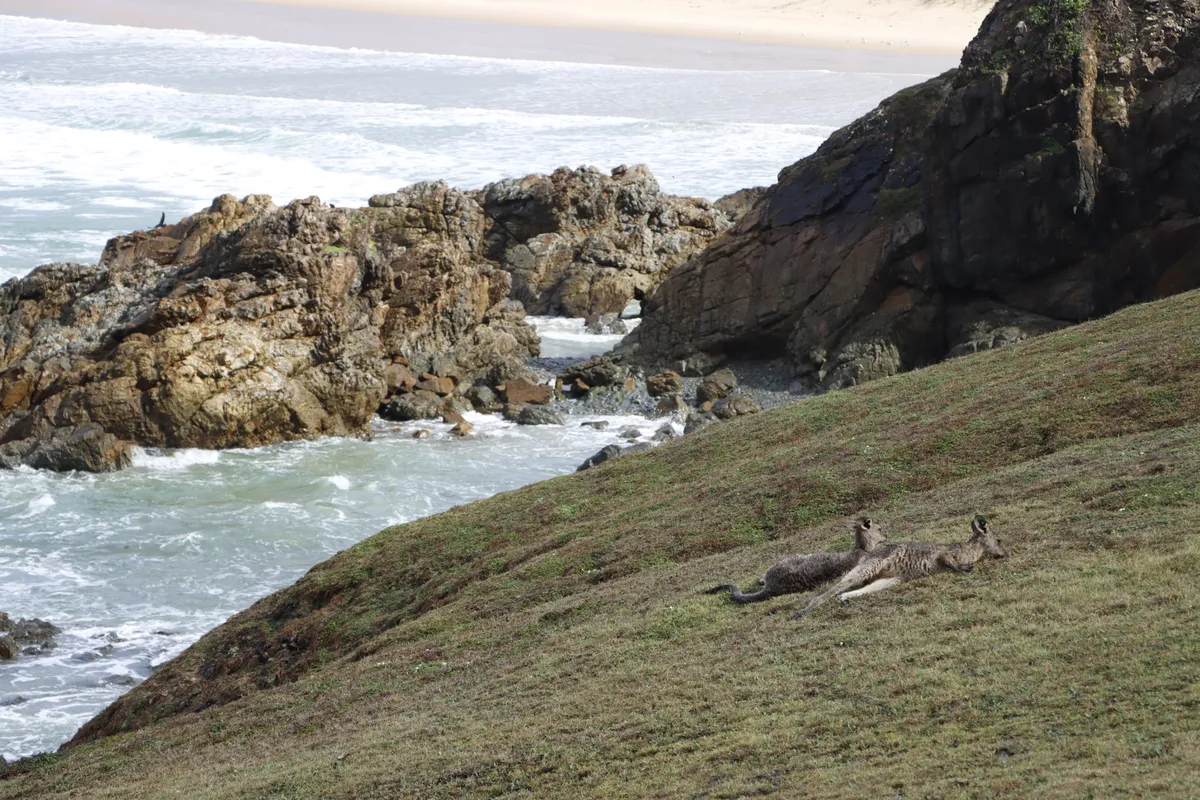
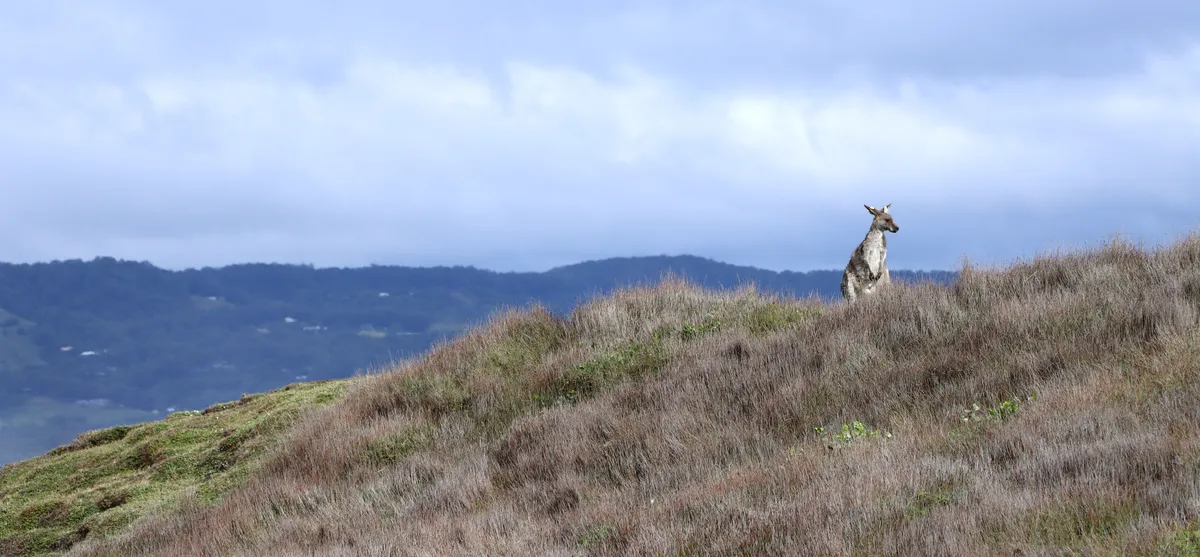
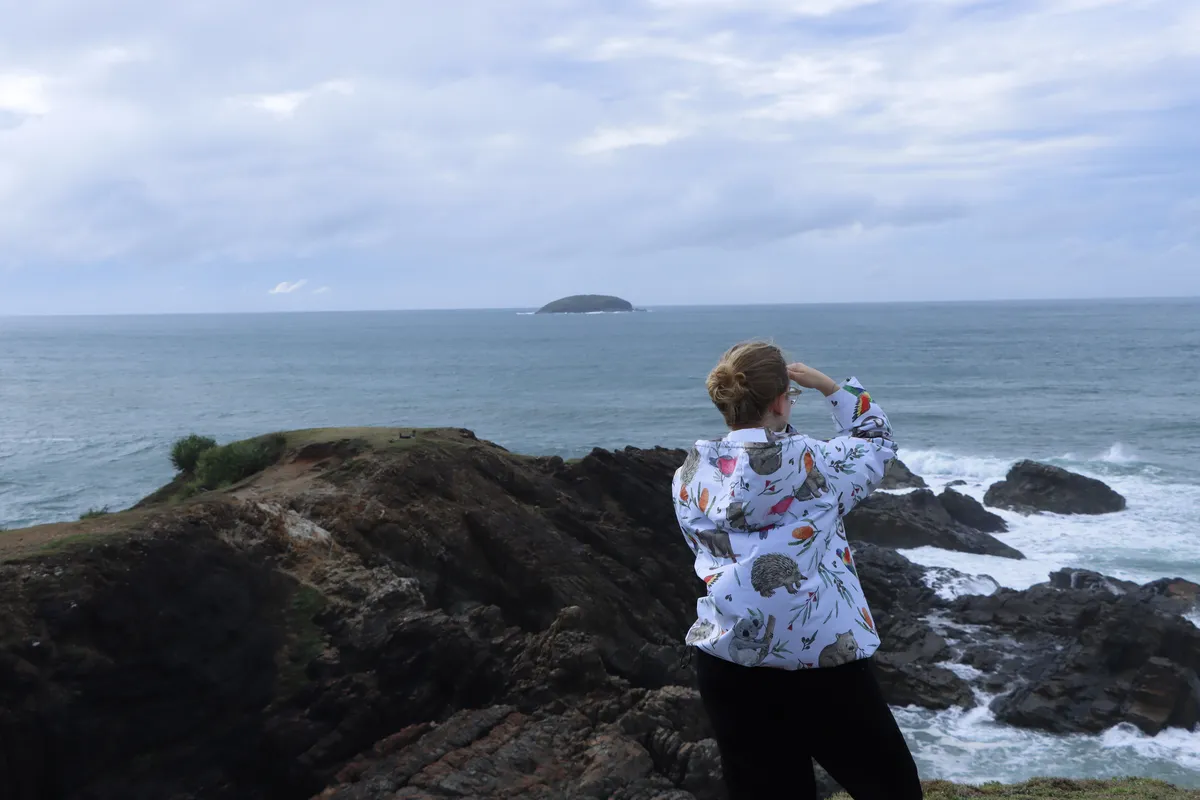
(Editing note from James: I'm not entirely convinced this last one is a kangaroo.)
Yamba
After our morning with the roos, we drove yet again further north and made it to Yamba. While we didn't visit the town of Yamba itself, we stopped instead at the famous Angourie Blue and Green Pools. While these natural freshwater pools are usually teeming with tourists during summer, we pretty much had the place to ourselves by traveling in winter. We braved the jump from a rock high above the Blue Pool (James choosing the highest rock possible, of course) and braced ourselves for cold water below.
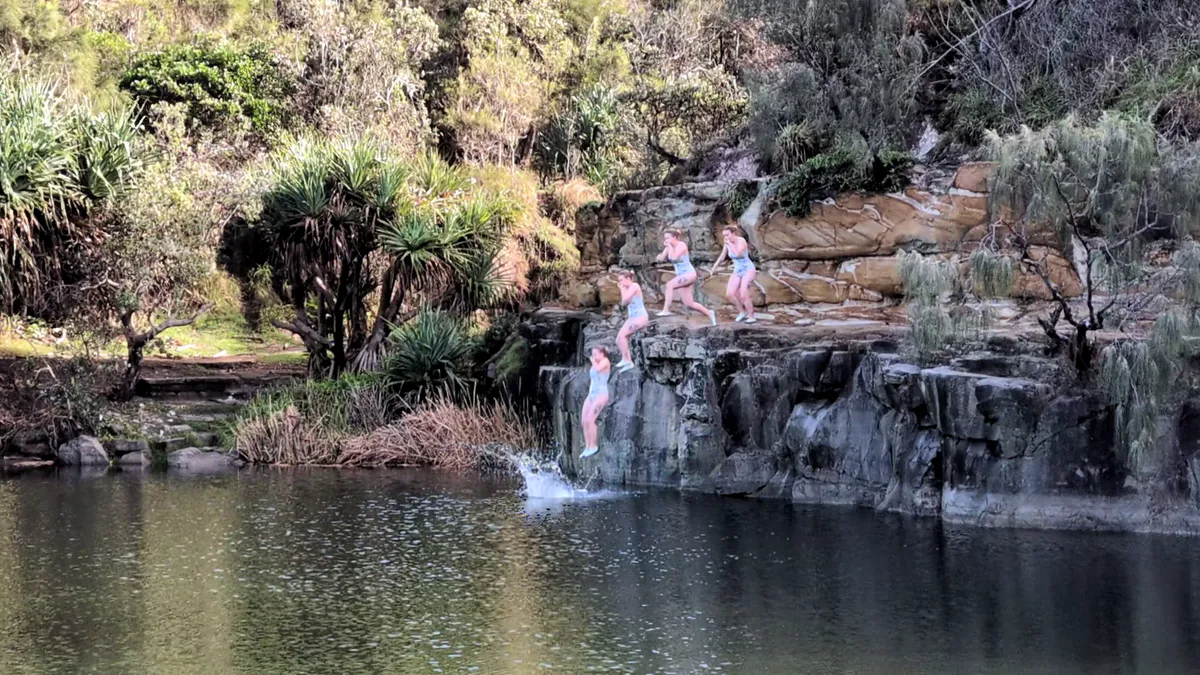
The fall through the air on the way down definitely felt like slow motion but, to our relief, the water wasn't too cold at all. Deep, however? Yes. Very. Neither of us touched the bottom as we plunged into the depths. We probably wouldn't want our feet to feel what it's like down there, anyway; or what creatures may be lurking...
We paddled around for a little while then crawled out of the pool via slippery rocks, and wandered around the coastal cliff area as we dried off in the sun. For lunch, we trudged back to the Wombat Wagon and got all fed and dried.
After that, we headed to another free camp, this time in the car park of a museum and restaurant in the tiny village of New Italy. It was a strange little place but did the job, as we parked up amongst a few other campers and allowed our wet swimmers from earlier to dry in the remaining afternoon sun.
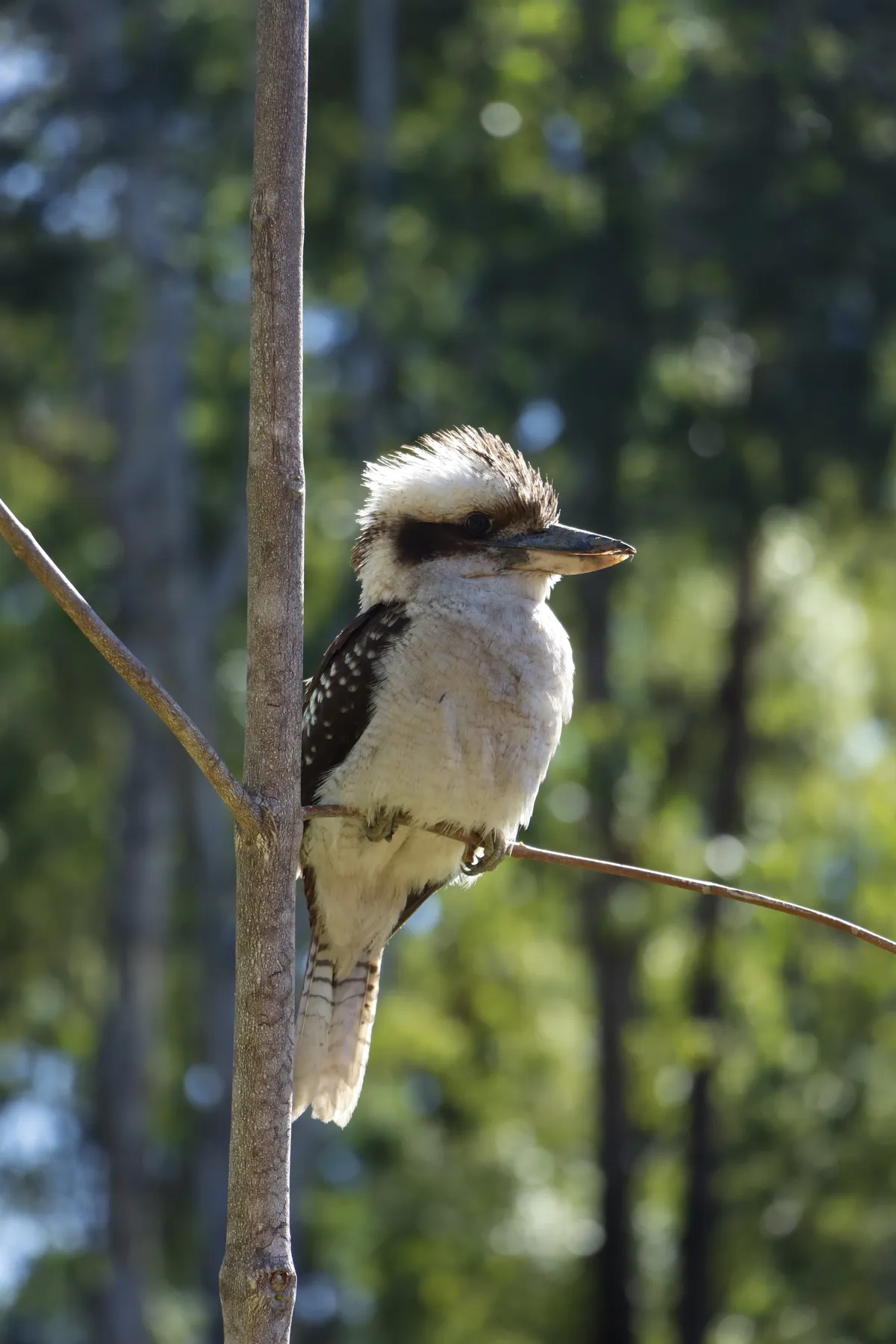
The following morning, a kookaburra joined me as I sat outside enjoying a cup of tea. It looked like the rain had finally gone for good, and our next stop was the famous Byron Bay. Keep an eye out for more blog posts soon, including our glorious day at Dorrigo National Park followed by the consequences of our first surfing lesson in Byron...